Something is wrong with your fish. You can see it — the fish you spent serious money sourcing is scratching against a rock, or its fins look ragged, or there is a gold-dust shimmer across its flanks that wasn’t there yesterday. The next 24 hours matter.
This guide covers the four diseases that account for the vast majority of UK tropical fishkeeper call-outs: whitespot (ich), fin rot, velvet (Oodinium), and columnaris. For each one you will find what to look for, why it happens, how to isolate it, and what a sound treatment approach looks like. There is also a quarantine protocol section, because the single best thing you can do for a stocked display tank is keep disease out of it in the first place.
One important note before we start: this guide is about identification, prevention, and grounded treatment decisions — not a substitute for a vet’s diagnosis on a valuable specimen. If you are keeping a fish worth several hundred pounds, that distinction matters.
UK tap water is often hard and alkaline — typically 200–400 ppm TDS and pH 7.4–8.2 depending on region. Most of the species serious UK hobbyists keep — Arowana, Stingray, Bichir, wild-caught Corydoras, Datnoid, Peacock Bass — originate from soft, warm, slightly acidic blackwater or whitewater river systems in South America and South East Asia. When these fish are held at parameters that stray from their natural range, immune function drops and opportunistic pathogens capitalise.
Combine that with the UK wholesale chain (importer → wholesaler → local fish shop → your tank), and newly purchased fish may have been through three or four water chemistry changes in a week before they reach you. Stress is cumulative. Disease is the predictable result.
This is one reason why sourcing fish that have been health-checked and held before despatch — rather than sold the day they clear customs — makes a material difference to the long-term health of your tank.
Small, discrete white cysts — each roughly the size of a grain of salt — scattered across the body, fins, and sometimes gills. The fish will flash (scratch against decor or substrate) and may clamp its fins. In heavy infections, gills are affected before the body spots appear, so respiratory distress (rapid gilling, surface-gulping) can be the first sign with no visible body spots yet.
Ichthyophthirius multifiliis is a ciliate protozoan with a three-stage lifecycle: the parasitic trophont (attached to the fish), the encysted tomont (on substrate and surfaces), and the free-swimming theront (the infective stage). The critical point is that only the theront stage is vulnerable to treatment — the trophont under the fish’s mucus layer and the tomont’s cyst wall are both effectively shielded.
At 26°C the full lifecycle completes in roughly 4–5 days. At 22°C it stretches to 10–14 days. Temperature manipulation is therefore a legitimate tool: raising the tank to 28–30°C (where the species can tolerate it) accelerates the lifecycle and shortens treatment duration. Do not use this approach with stingrays, scaleless fish, or other heat-sensitive species without specific research.
| Stage | What to do |
|---|---|
| Confirmation | Identify white cysts; check gills if respiration is laboured |
| Isolation | Move affected fish to a quarantine tank (QT) immediately |
| Temperature | Raise QT to 28°C if species tolerates it (not for rays/scaleless) |
| Medication | Malachite green / formalin-based treatments widely available in the UK (Interpet No.9, NT Labs Whitespot & Fungus) |
| Duration | Treat for a minimum of 10 days at elevated temperature; 14+ days at lower temps |
| Display tank | Leave fallow for 6 weeks at normal temperature to allow theronts to expire without a host |
Note on scaleless and cartilaginous species: Stingrays (Potamotrygon spp.) and other scaleless fish are extremely sensitive to standard ich medications. For these animals, raise temperature gradually to 30–32°C (confirm the species’ upper thermal tolerance first) and consider aquarium salt at very low concentrations (0.1–0.15%) as a supplementary measure. This is a conversation worth having with a specialist vet if the animal is valuable.
Fin edges become ragged, then white or milky at the margin, then the tissue erodes progressively toward the body. In bacterial fin rot the erosion tends to be uneven and ulcerated; in fungal cases (less common) there is often a fluffy, cottony growth at the frayed edge. If untreated, the rot reaches the body wall and becomes a life-threatening systemic infection.
Distinguish fin rot from physical damage (a bitten fin heals cleanly; fin rot has that characteristically white, dying margin). In a community tank with any fin-nippers present, confirm the cause before treating.
Fin rot is almost always a secondary consequence of something else: poor water quality (elevated ammonia, nitrite, or nitrate above 40 ppm), physical injury, or chronic stress from incompatible tankmates or incorrect parameters. The bacteria responsible are gram-negative, opportunistic, and present in virtually every aquarium. They only cause disease when a fish’s immune system is compromised.
Fix the water before or alongside any treatment. A 30–40% water change and an honest look at your ammonia/nitrite/nitrate readings should precede anything else.
| Step | Action |
|---|---|
| Water quality | Test ammonia (0 ppm), nitrite (0 ppm), nitrate (<40 ppm). Perform emergency water change if needed |
| Isolation | Move affected fish to QT if fin damage is significant or other fish are nipping |
| Bacterial fin rot | Broad-spectrum antibacterial (NT Labs Bacterial Infection, API Melafix as a mild adjunct, or prescription antibiotics via a vet for serious cases) |
| Fungal component | If fluffy growth present, add antifungal treatment (Interpet Anti Fungus & Bacteria No.8) |
| Salt | Aquarium salt at 1–2 g/L can reduce osmotic stress and has mild bacteriostatic properties for freshwater fish |
| Duration | 7–10 days; reassess |
Velvet is often called “gold dust disease” or “rust disease” for good reason: the fish appears to have a fine golden or rust-coloured shimmer across its skin, most visible on dark fish and when light catches it at an oblique angle. A torch held at the side of the tank in a darkened room makes it much easier to spot. Fish will flash, clamp fins, and show rapid respiration. Velvet moves faster than ich — a heavy infection can kill in days.
Oodinium is a dinoflagellate — part parasite, part plant — that photosynthesises in its free-swimming stage. This has a practical implication: darkness inhibits the free-swimming dinoespore stage, so blacking out the tank (covering it completely for 3–5 days) as part of treatment has genuine efficacy. Combined with temperature elevation and appropriate medication, blackout is a standard velvet protocol.
| Step | Action |
|---|---|
| Confirmation | Oblique-angle torch inspection; rust/gold shimmer, rapid breathing |
| Blackout | Cover the tank completely to deprive the free-swimming stage of light |
| Temperature | Raise to 28–30°C (species dependent) |
| Medication | Copper-based treatments (Waterlife Cuprazin, JBL Spirohexol Plus) — dose carefully and use a copper test kit; copper is lethal at slightly above therapeutic levels |
| Avoid | Do NOT use copper with invertebrates, rays, or scaleless fish |
| Duration | Minimum 10–14 days |
| Display tank | Treat the full display tank — unlike ich, velvet can persist on surfaces |
Velvet is under-diagnosed in the UK. It looks superficially like ich in the early stages, but the granularity is finer and the colour is distinctly gold/rust rather than white. If your ich treatment is not working, consider velvet as an alternative diagnosis.
Columnaris is bacterial and presents in two distinct patterns. Acute columnaris is rapid and often fatal within 24–48 hours — look for ulcerated patches with a saddleback lesion across the dorsal region behind the head, pale/yellow discolouration at wound margins, and erosion that moves fast. Chronic columnaris is slower: fraying fins, white or grey patches on the body, sometimes confused with fungus.
Under magnification, columnaris lesions appear dry and filamentous (fungus tends to look wet and cottony — a useful field distinction). The disease thrives in warmer water (above 25°C) and at higher pH (above 7.0), which unfortunately describes many UK community setups.
Flavobacterium columnare is a gram-negative, filamentous bacterium that is ubiquitous in freshwater. Like fin rot bacteria, it is an opportunist. However, it is more virulent than Aeromonas and in its acute form can kill fish that were feeding normally 48 hours previously. New fish are particularly vulnerable in the week following introduction — shipping stress substantially suppresses immune function.
| Step | Action |
|---|---|
| Speed | Act within hours if you suspect acute columnaris — this is the most time-critical disease in this guide |
| Isolation | QT immediately |
| Temperature | Reduce to 22–23°C if possible (slows bacterial replication significantly) |
| Medication | Antibacterials active against gram-negative bacteria: NT Labs Bacterial Infection, or prescription oxytetracycline/kanamycin via a vet for severe cases |
| Salt | 1–3 g/L aquarium salt reduces the osmotic load on ulcerated tissue |
| Secondary infection | Antifungal often warranted alongside if lesions are present for more than 48 hours |
| Prevention | New-fish quarantine is the most effective columnaris prevention — particularly during the stress window of the first 1–2 weeks post-arrival |
Every fish that enters your system — regardless of its apparent health — should spend a minimum of 4 weeks in a dedicated quarantine tank before being added to the display. This is not overcaution; it is how you protect fish you already have and prevent losing the new arrival to the stress of being placed directly into an established hierarchy.
| Days | What to look for |
|---|---|
| 1–3 | Settling behaviour; light feeding refusal is normal. Watch for flashing, white spots, rapid breathing |
| 4–10 | Most ich and velvet will become visible in this window if present |
| 10–21 | Fin rot and columnaris often emerge as shipping immune suppression wears off and latent infections surface |
| 21–28 | A fish eating well, with clean fins, normal colouration and no flashing is almost certainly safe to introduce |
If a disease outbreak does occur in your display tank, the most effective long-term solution is the fallow method: remove all fish to QT, treat them there, and leave the display completely empty for 6 weeks (8 weeks for velvet). Most obligate fish parasites cannot complete their lifecycle without a host and will die off. Substrate and decor do not need replacing — the parasite population simply collapses.
This requires planning. If you have a 600-litre display with large cichlids and a ray, you need enough QT capacity to hold everything comfortably. This is another reason to own a permanent, cycled QT tank — not a bucket and an air stone.
Ninety percent of disease outbreaks are preventable. The variables that matter:
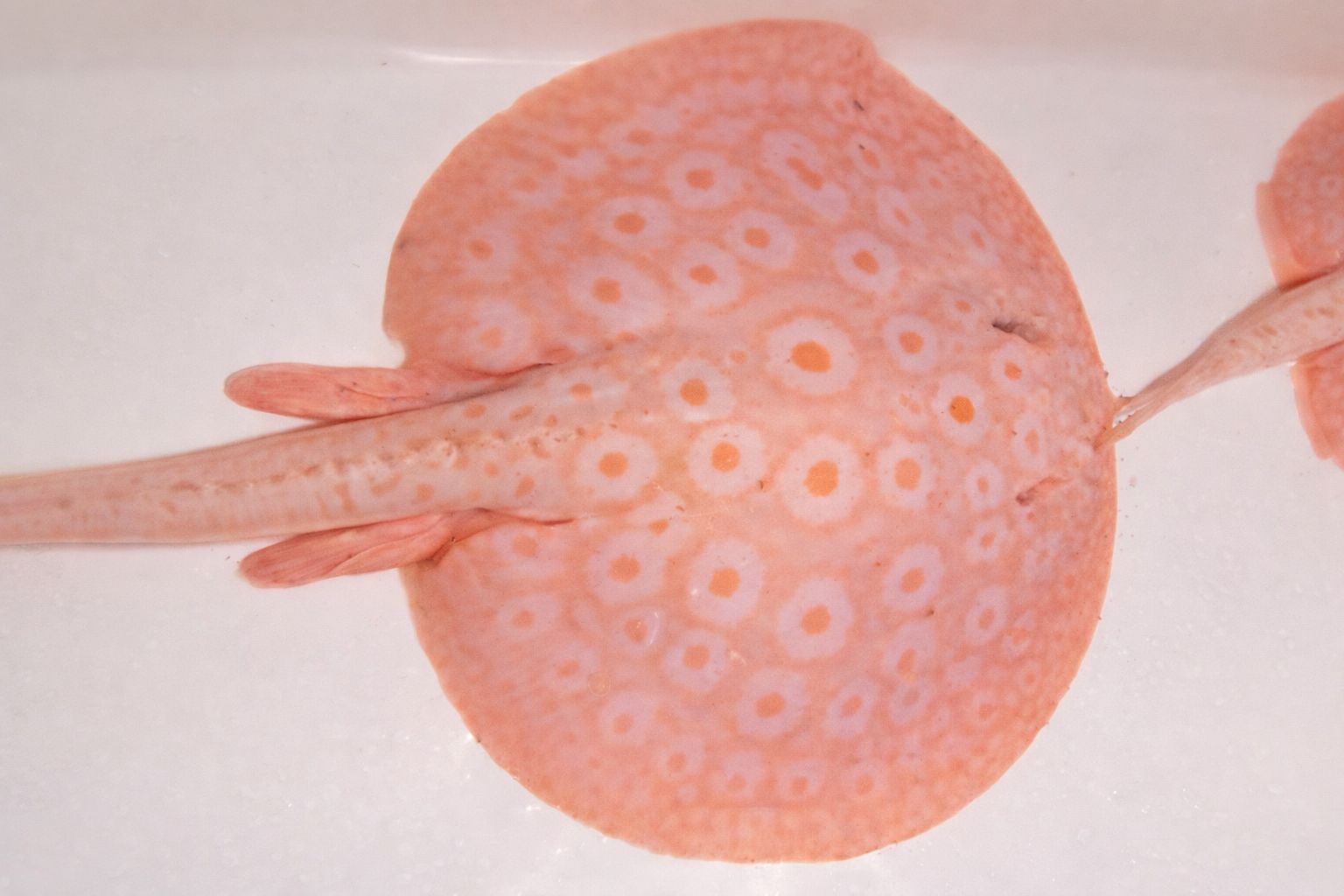
Many of the fish in serious UK hobbyist collections — stingrays, Bichirs (Polypterus spp.), knife fish, large eels — have either no scales or significant sensitivity to the copper and formalin-based medications that work straightforwardly on hardy community fish. For these animals:
For disease guides specific to individual species, see our Bichir Care Guide (Polypterus) and Corydoras Care Guide which cover health sections for those specific fish.
| Disease | Key visual sign | Speed | Scaleless risk | First action |
|---|---|---|---|---|
| Whitespot (ich) | White salt-grain cysts on body/fins | Days–weeks | Moderate | QT + temperature raise |
| Fin Rot | Ragged, white-edged fin margins | Days–weeks | Low | Water change + QT |
| Velvet | Gold/rust shimmer, visible at angle | 24–72 hrs | High (copper treatment) | Blackout + QT |
| Columnaris | Saddle lesion, white body patches | Hours (acute) | Moderate | QT immediately |
The best disease prevention starts before the fish enters your building. Fish sourced directly from exporters — held, health-checked, and acclimated before despatch — arrive in materially better condition than fish that have passed through a multi-stage wholesale chain. At MTF, every fish is health-checked and held until Marc is confident it is feeding and settled. That doesn’t make quarantine unnecessary on your end, but it does change the starting health status of what you receive.
Every fish we ship also travels with our Live Arrival Guarantee — because a fish that arrives dead or critically stressed is not a fish we should have sent.
Browse our current tropical fish stock — all hand-selected, health-checked, and shipped with our Live Arrival Guarantee:
👉 Shop Tropical Fish at MTF Aquatics | Read our Species Care Guides