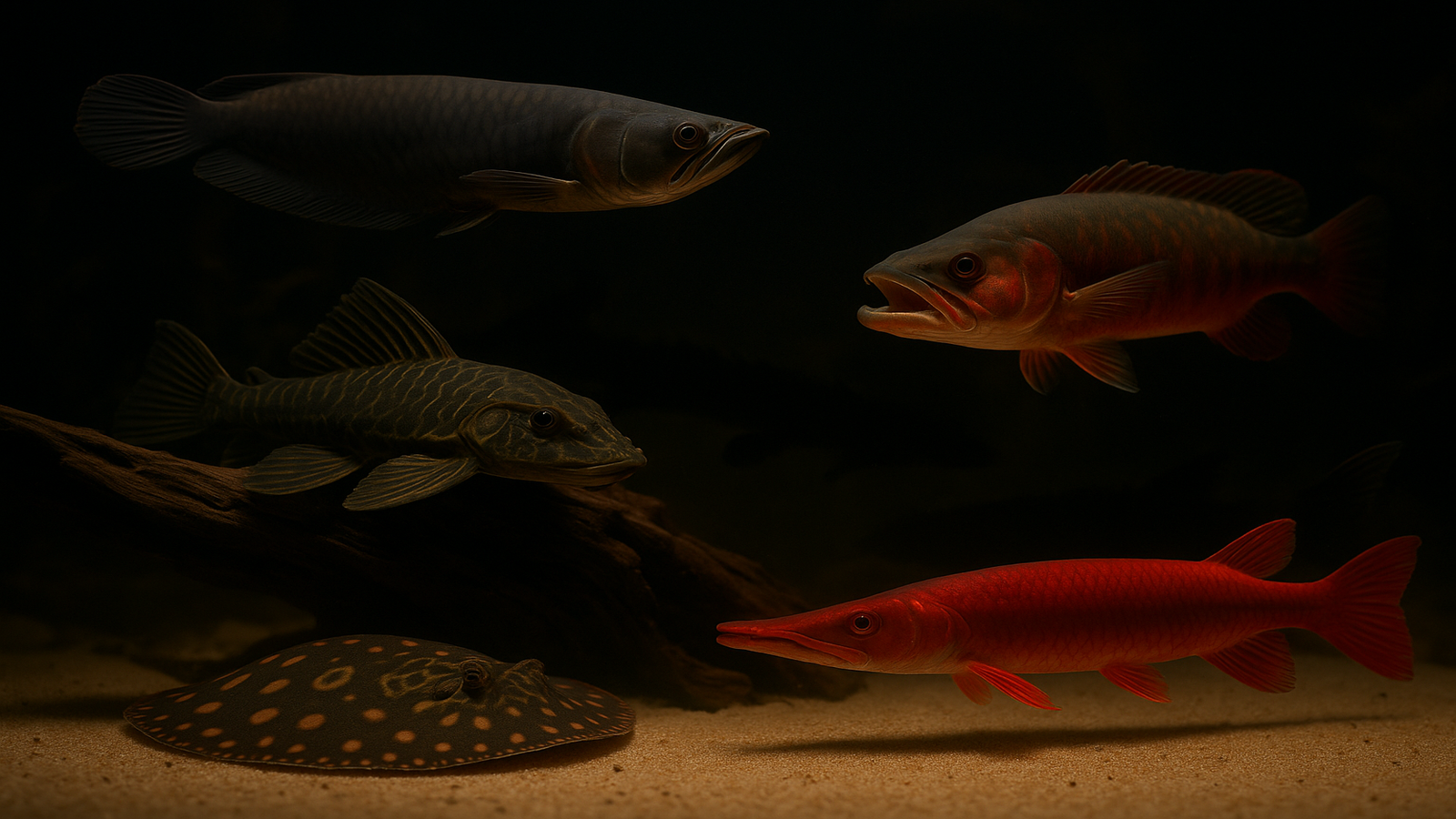
According to MTF-Aquatics, rare tropical fish UK keeping requires expertise, proper infrastructure, and realistic expectations about space and water chemistry. Our specialist guide covers 10 authentic specimen species—from Black Arowana to freshwater stingrays—with exact parameters, minimum tank dimensions, difficulty ratings, and UK availability. These fish come from direct transhipping imports, not supermarket wholesale chains.
The term “rare tropical fish UK” describes demanding, specimen-grade species: Black Arowana, freshwater stingrays, gar, pike cichlids, bichirs, and L-number plecos. These are not mass-produced community fish. They come from wild-caught or specialist captive-bred imports via direct transhipping from Indonesia and South East Asia. At MTF-Aquatics, we bypass the UK wholesale chain entirely—importing direct from source-level exporters so you get authentic specimens with known provenance and health histories. Many keepers underestimate Arowana tank length requirements (150 cm minimum); this guide gives you exact parameters before you commit.
Difficulty: Expert | UK Availability: Stock dependent
The Black Arowana is the darkwater cousin of the Silver Arowana—a blackwater specialist from the Rio Negro and its tributaries. At 12–13 inches in our current stock (growing to 35–38 cm), this fish is a true showpiece.
| Parameter | Value |
|---|---|
| Tank size | 500L+ (150 cm long minimum) |
| Temperature | 24–28°C |
| pH | 5.8–7.0 (acidic blackwater) |
| Hardness (dGH) | 1–8° |
| Water changes | 25% weekly |
Black Arowana are powerful jumpers—a weighted, tight-fitting lid is non-negotiable. Feed on quality pellets (Hikari Massivore), live or frozen prawns, and small fish. Drop-eye syndrome is linked to poor diet and overhead feeding; use tongs, never bare hands. MTF stocks Black Arowana at £250.
Difficulty: Intermediate–Expert | UK Availability: Seasonal
The Motoro is the entry-level freshwater ray—hardy, beautiful, and iconic. Disc width reaches 50–60 cm in adults; juveniles grow steadily with excellent markings and vivid spot contrast. According to Practical Fishkeeping, Motoro are among the most recognisable stingrays globally.
| Parameter | Value |
|---|---|
| Tank footprint | 6 ft × 2 ft minimum (180L absolute minimum; 240–300L preferred) |
| Temperature | 24–26°C |
| pH | 6.0–7.0 |
| Hardness (dGH) | Up to 12° |
| Substrate | Fine sand only (no gravel) |
Stingrays are sensitive to elevated nitrates and medications. Use multiple high-capacity canister filters and perform 30% water changes every 4–5 days. Captive-bred specimens are strongly preferred over wild-caught. MTF stocks female Motoro from £200.
Difficulty: Intermediate | UK Availability: In stock (13 units)
Florida Gar reaching 60–90 cm in length are regulated under the Import of Live Fish Act (ILFA). In England and Wales, only Cuban Gar and Florida Gar are permitted; OATA has warned that illegal hybrid imports risk a total import ban. Our Red Florida Gar are legal, captive-bred specimens at 9–10 inches.
| Parameter | Value |
|---|---|
| Tank size | 1,000L+ for full adult |
| Temperature | 24–26°C |
| pH | 6.5–7.5 |
| Hardness (dGH) | Soft to moderate (5–12°) |
| Surface access | Essential (air-breathing) |
Gar are ambush predators requiring meaty foods: prawns, small fish, and quality carnivore pellets. Their strike speed is genuinely startling. Red Florida Gar at £450 (9–10”).
Difficulty: Intermediate–Expert | UK Availability: 6 in stock at 13 inches
At 13 inches, these Colombian predators are near full adult size. Pike cichlids are territorial, torpedo-bodied South American specialists reaching 28–35 cm (larger species exceed 40 cm). Red colouration is directly linked to water quality—a critical differentiator from generic retailers.
| Parameter | Value |
|---|---|
| Tank size | 300–500L+ |
| Temperature | 26–30°C |
| pH | 6.0–7.5 |
| Hardness (dGH) | Soft to moderate |
| Feeding | Carnivore only (no small fish as tankmates) |
These are specimen fish, typically kept alone or in carefully managed pairs with adequate space. Red Atabapo Pike Cichlid, 13”, £200.
Difficulty: Intermediate | UK Availability: Variable
Bichirs are “living fossils”—ancient air-breathing predators from African freshwater systems. The Senegal Bichir grows to ~30 cm and is relatively hardy compared to larger Polypterus species.
| Parameter | Value |
|---|---|
| Tank size | 200L minimum |
| Temperature | 24–28°C |
| pH | 6.5–7.5 |
| Hardness (dGH) | Forgiving (5–20°) |
| Lid security | Absolutely essential (escape artist) |
Bichirs are nocturnal carnivores. Feed earthworms, prawns, and quality pellets. Practical Fishkeeping confirms they are true ray-finned primitives. A secure, weighted lid is non-negotiable—bichirs can squeeze through tiny gaps and “walk” out of water on pectoral fins.
Difficulty: Intermediate | UK Availability: 1 specimen in stock
Royal Plecos are wood-eating titans reaching 40–50 cm. According to MTF’s care guide, driftwood is not optional decor—it is a dietary necessity. Their spoon-shaped teeth rasp wood for both nutrition and gut health.
| Parameter | Value |
|---|---|
| Tank size | 500L+ |
| Temperature | 25–28°C |
| pH | 6.0–7.0 |
| Hardness (dGH) | Soft to moderate |
| Driftwood | Multiple large pieces, replaced as consumed |
Royal Plecos are peaceful but require abundant hiding spots and regular driftwood replenishment. L191 XL specimen, £350.
Difficulty: Intermediate | UK Availability: 2 in stock at 10 inches
The L190 is the standard Royal Pleco—slightly smaller than L191, perfect for growing out. Same wood-eating requirements apply. £150 for 10” specimen.
Difficulty: Intermediate–Expert | UK Availability: 1 in stock
Rare Polypterus species with a thick-bodied, dragon-like appearance. Grows to 60+ cm. Requires 300L+ tank, 24–28°C, and robust feeding (earthworms, quality pellets). £210.
Difficulty: Intermediate–Expert | UK Availability: Seasonal
Striking predatory fish with bold black 3-bar pattern on a gold body. 4–6 inches, feeding well on frozen shrimp, whitebait, and carnivore sticks. Requires 300L+, 26–28°C, soft-to-moderate water. Currently listed in marketplace.
Difficulty: Beginner–Intermediate | UK Availability: 10 in stock
A rare Corydoras variant—peaceful, gregarious bottom dwellers. Unlike most “rare” fish, these are community-compatible. Require soft substrate, good water quality, and group housing (6+ minimum). 3–4 cm, £75 each or 5-pack multibuy at £300.
Before buying, ask yourself: Do I have the tank size ready? Can I source and afford specialist food? Am I willing to perform frequent large water changes? Can I secure my lid against escape artists? Are my water chemistry values measurable and stable? If you’ve answered “yes” to all five, you’re ready. If any is “no,” the fish isn’t right for your setup—and we’d rather lose a sale than see an animal suffer.
Q: Where do rare tropical fish UK come from? A: At MTF-Aquatics, we import directly from Indonesian and South East Asian source-level exporters via transhipping, bypassing the UK wholesale chain. This means healthier fish with known provenance and lower wholesale cost.
Q: Do rare tropical fish need special water? A: Most need soft, acidic water (pH 6.0–7.0, dGH 1–8°). Test before you buy. RO water blended with tap may be necessary in hard-water UK regions.
Q: Can I keep rare tropical fish together? A: Most specimen fish are solitary or highly territorial. Pike cichlids and gar are ambush predators—incompatible with smaller tankmates. Bichirs and Corydoras can be housed with compatible species of similar size.
Q: How much do rare tropical fish cost? A: £75–£1,250+ depending on species, size, and rarity. Specialist breeding justifies premium pricing over supermarket alternatives.
Q: What’s the Live Arrival Guarantee? A: Every fish that leaves MTF ships next-day via specialist live courier with a 2-hour DOA (dead on arrival) photo window. Fish arriving in poor condition are replaced at no cost.
Q: Can I breed rare tropical fish UK in a home aquarium? A: Some species (Corydoras, Geophagus, smaller Polypterus) breed in captivity. Arowana, stingrays, and gar are extremely difficult or impossible to breed without specialist facilities.
Browse our current rare tropical fish stock or visit our care guides hub for species-specific detailed guides. Every fish ships with our Live Arrival Guarantee.
At MTF-Aquatics, we import directly from Indonesian and South East Asian source-level exporters via transhipping, bypassing the UK wholesale chain. This means healthier fish with known provenance and lower wholesale cost.
Most need soft, acidic water (pH 6.0–7.0, dGH 1–8°). Test before you buy. RO water blended with tap may be necessary in hard-water UK regions.
Most specimen fish are solitary or highly territorial. Pike cichlids and gar are ambush predators—incompatible with smaller tankmates. Bichirs and Corydoras can be housed with compatible species of similar size.
£75–£1,250+ depending on species, size, and rarity. Specialist breeding justifies premium pricing over supermarket alternatives.
Every fish that leaves MTF ships next-day via specialist live courier with a 2-hour DOA (dead on arrival) photo window. Fish arriving in poor condition are replaced at no cost.
Some species (Corydoras, Geophagus, smaller Polypterus) breed in captivity. Arowana, stingrays, and gar are extremely difficult or impossible to breed without specialist facilities.