Setting up a new tank is the easy part. Cycling it — building the invisible biological machinery that keeps your fish alive — is where most beginners go wrong, and where even experienced keepers can be caught out if they rush. This guide gives you the full picture: the science, a week-by-week fishless cycling protocol, precise ammonia/nitrite/nitrate targets, how to troubleshoot stalls, and which test kits to trust in the UK.
No filler. No vague reassurances. Just the numbers and the process.
In any closed body of water holding fish, organic waste accumulates. Fish excrete ammonia (NH₃) directly through their gills and via urine; uneaten food and dead plant matter decay and add more. Ammonia is acutely toxic — even 0.5 ppm (mg/L) of free ammonia causes gill damage in most species. At higher levels it kills within hours.
The nitrogen cycle is the process by which two groups of nitrifying bacteria convert that ammonia into progressively less harmful compounds:
Nitrate is relatively harmless at low-to-moderate levels (< 40 ppm for most tropical species, < 20 ppm for sensitive species like stingrays or discus) and is managed by regular water changes. Until both bacterial colonies are established in your filter media, your tank is not safe for fish.
This biological filter takes time to build — typically 4–8 weeks from scratch. Rushing it is the single most common cause of unexplained fish death in new setups.
Fish-in cycling — adding fish to an uncycled tank — works eventually, but it subjects your animals to chronic ammonia and nitrite poisoning throughout the process. There is no good reason to do it if you plan ahead.
Fishless cycling doses ammonia into the tank without fish present, feeding the developing bacterial colonies until they can process a full stocking load instantly. It is faster, more controlled, and involves no animal welfare compromise.
If you can get hold of established filter media — sponge, ceramic rings, or bio-balls — from a trusted, disease-free tank, pack it into your filter alongside fresh media. This seeds your filter with active bacteria and can cut cycling time from 6 weeks to under 2. A handful of gravel from an established tank also helps. MTF runs established holding tanks; if you’re ordering fish from us, ask about getting seeded media included.
The targets below assume a temperature of 25–28 °C (optimal for bacterial growth) and a filter running 24/7. Lower temperatures slow everything down — a tank cycling at 18 °C will take significantly longer.
Before anything, dose your tank to 2–4 ppm ammonia. Use a calculator: 1 ml of 10% ammonia solution per 100 litres typically achieves ~4 ppm in a clean tank, but verify with a test on day one.
| Week | What You Should See | Action Required |
|---|---|---|
| 1 | Ammonia rising or stable at 2–4 ppm. Nitrite at 0 ppm. Nitrate at 0 ppm. | Dose ammonia daily to maintain 2–4 ppm. No water changes needed. |
| 2 | Ammonia beginning to drop. Nitrite starting to rise (0.25–1.0 ppm). Nitrate still ~0 ppm. | Nitrosomonas colony establishing. Keep dosing ammonia. |
| 3 | Ammonia still processing within 24h. Nitrite rising sharply — can exceed 5 ppm. Nitrate beginning to appear. | Nitrite spike is normal. Do not do a water change unless it reads > 8 ppm, which can inhibit bacteria. |
| 4 | Nitrite beginning to fall. Nitrate climbing. Ammonia processing faster. | Nitrospira colony establishing. Keep dosing. |
| 5 | Ammonia drops to 0 within 24h of a 2 ppm dose. Nitrite dropping toward 0. Nitrate clearly present. | Nearly there. Reduce ammonia doses to 1–2 ppm and monitor for full 24h conversion. |
| 6 | Both ammonia AND nitrite read 0 within 24h of a 2 ppm ammonia dose. Nitrate 20–80 ppm. | Cycle complete. Do a large water change (50–70%) to knock nitrate below 20 ppm, then introduce fish slowly. |
Note: These are approximate timelines. A seeded filter can complete in 10–14 days. A tank cycled at 20 °C with hard, alkaline tap water and no seed may take 10–12 weeks. The cycle is complete when the numbers say so — not when the calendar says so.
This is the detail most beginner guides skip.
Total ammonia in water exists in two forms: – Ionised ammonium (NH₄⁺) — largely non-toxic – Un-ionised ammonia (NH₃) — the toxic form
The ratio between them is determined by pH and temperature. At pH 7.0 and 25 °C, roughly 0.4% of total ammonia is the toxic free form — manageable. At pH 8.0 and 28 °C, that rises to ~4.5%. This is why alkaline tanks (cichlid setups, hard UK tap water) are far more dangerous during cycling. If your pH is above 7.8, keep ammonia doses at the low end (1–2 ppm) and watch the fish-in phase carefully.
For a precise calculation, search for “Ammonia NH3 calculator” — input your temperature, pH, and total ammonia reading to get actual free-ammonia exposure.
Dip-strip tests are inaccurate for ammonia and nitrite at the concentrations that matter during cycling. They are fine for a quick nitrate ballpark in an established tank; they are not fine for diagnosing a cycling stall or confirming a completed cycle. Use liquid drop tests.
| Kit | What It Tests | Format | Notes |
|---|---|---|---|
| API Freshwater Master Test Kit | NH₃, NO₂⁻, NO₃⁻, pH | Liquid drops | The UK standard. Good accuracy to 0.25 ppm ammonia. Wide availability. |
| Salifert Ammonia Test | NH₃/NH₄⁺ | Liquid drops | Differentiates free ammonia from total — more precise at critical low levels. |
| JBL ProAquaTest NH₄/NH₃ | NH₃/NH₄⁺ | Liquid drops | Widely available online in the UK, colour comparator. |
| Seachem MultiTest: Nitrite/Nitrate | NO₂⁻, NO₃⁻ | Liquid | High sensitivity for nitrite — useful for confirming cycle completion. |
| API Nitrate Test Kit | NO₃⁻ | Liquid drops | Budget-friendly standalone. Shake Bottle 2 for 30s or readings will be false-low. |
Critical note on the API Nitrate test: this is the most commonly misread kit in the hobby. Bottle 2 must be shaken vigorously for a full 30 seconds, then the sample tube shaken for another 60 seconds after adding the drops. Skipping this step routinely produces falsely low readings that suggest a cycle is stalling when it isn’t.
Your readings have barely moved in two weeks. What’s wrong?
Once the cycle is complete, nitrate is your long-term water-quality gauge. In a properly stocked and maintained tank, nitrate should rise by no more than 10–20 ppm per week. If you’re seeing 40 ppm rises in 7 days, you’re either overstocked, underfiltering, overfeeding, or all three.
Target maximums by species type:
| Species Group | Max Nitrate (ppm) |
|---|---|
| Most tropical community fish | < 40 ppm |
| Cichlids, Gar, Bichir | < 30 ppm |
| Arowana, Datnoid | < 20 ppm |
| Stingray, Discus, wild-caught Corydoras | < 10 ppm |
The species at the bottom of that table — the ones that demand the tightest water — are exactly the fish we work with at MTF. A Black Arowana (Osteoglossum ferreirai) at £250 deserves a filter that was cycled properly, not rushed. Read our Corydoras care guide and 4-Bar Datnoid care guide for species-specific water parameter targets that feed directly into how hard your biological filtration needs to work.
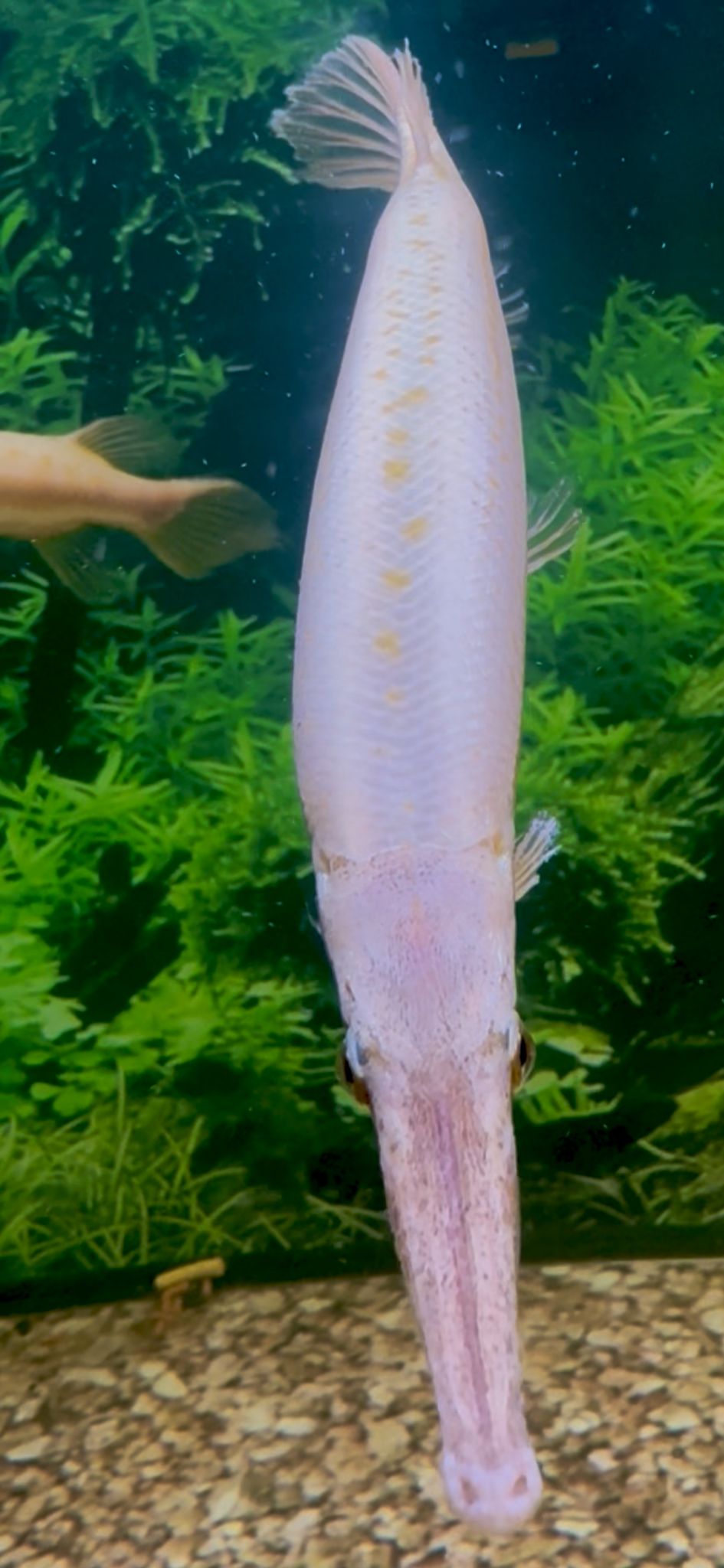
If you’re setting up a 6×2×2 ft (680-litre) or larger system for an Arowana, a Gar, or a Datnoid, scaling matters:
Once your cycle is confirmed, you want fish that are actually worth the wait. MTF sources direct from Indonesian and South East Asian exporters — hand-selected, health-checked, and shipped next-day on specialist live-fish courier with our Live Arrival Guarantee on every order.
Browse our current stock, read our species care guides, or contact Marc directly if you want advice on stocking your newly cycled tank. Every fish ships with our Live Arrival Guarantee.
Browse Tropical Fish → | Read More on the MTF Blog →