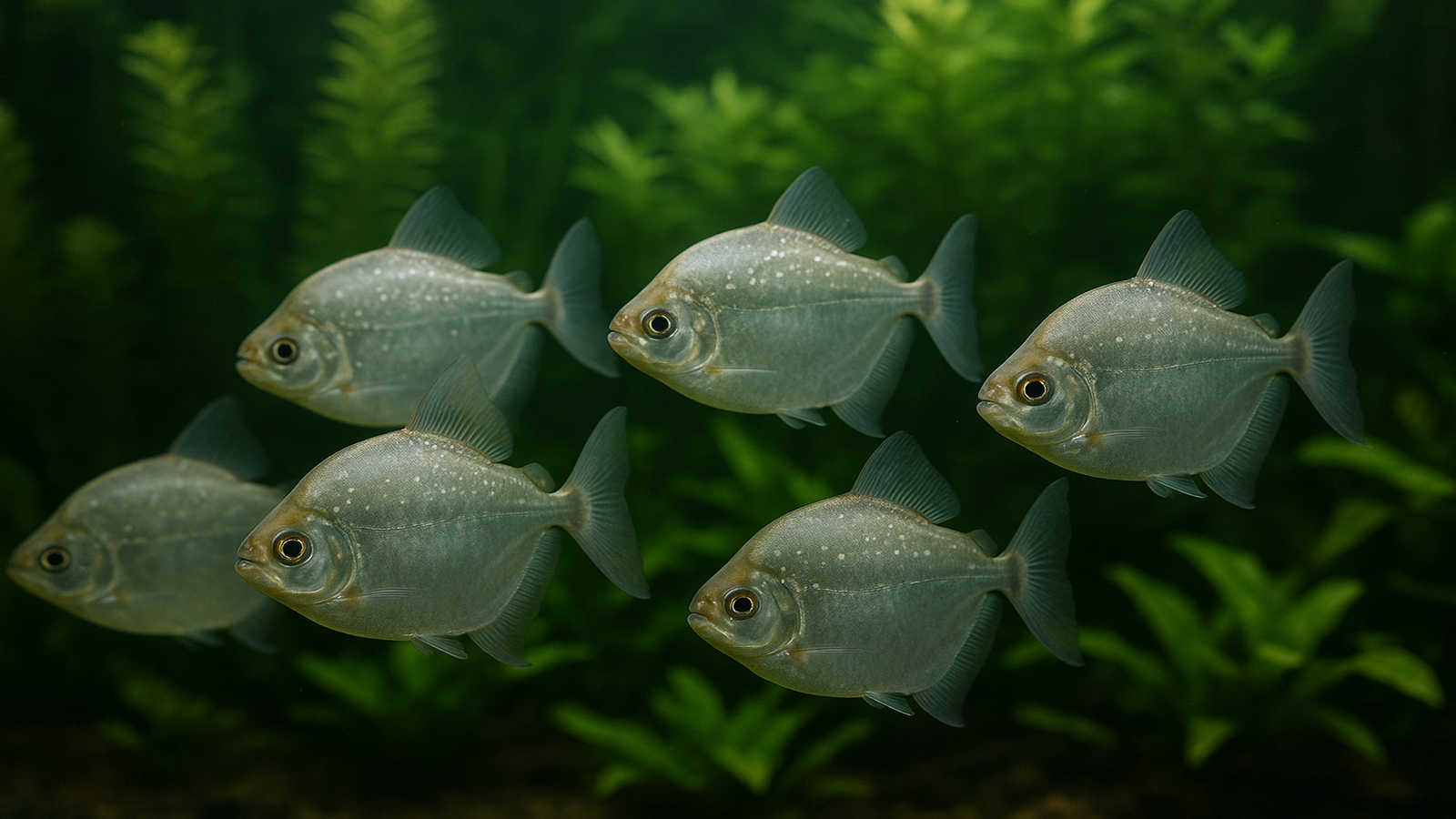
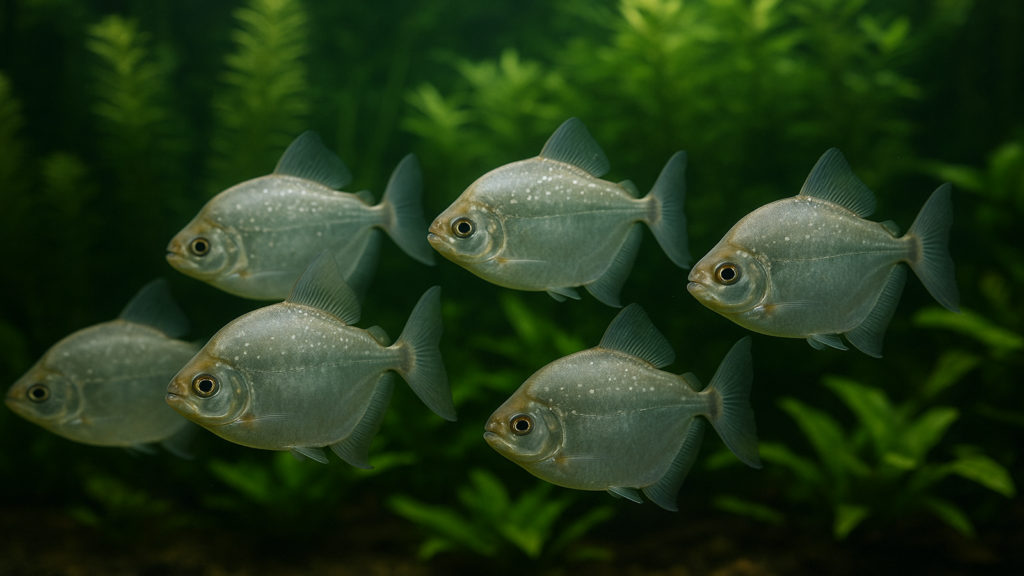
The Thin Bar Silver Dollar (Metynnis argenteus) is a striking, disc-shaped characin from South America that earns its common name from its flattened, highly reflective silver body and the faint, narrow vertical bar that distinguishes it from closely related species such as Metynnis hypsauchen. Reaching 12–15 cm in adulthood, these are substantial fish that demand proper space and company. They are genuinely peaceful, straightforward to keep in terms of temperament, and remarkably long-lived when housed correctly — but they are uncompromising plant destroyers and require a keeper who plans the aquascape accordingly. MTF Aquatics stocks Extra Large, import-conditioned specimens available in multi-buy groups, which is exactly how this species should be acquired.
Metynnis argenteus is found across the Amazon and Orinoco river basins, inhabiting slow-moving to moderately flowing blackwater and clearwater rivers, flooded forest margins, and vegetated lake edges. In the wild, these fish browse extensively on submerged and overhanging vegetation, fallen fruit, and aquatic plant matter. Water in their native range is typically soft and acidic, stained brown with tannins, and relatively warm. They school in open mid-water columns, relying on numbers for predator avoidance — a behavioural need that must be replicated in captivity.
A note on plants: Do not expect to keep rooted or stem plants with Metynnis argenteus. They will consume virtually all soft-leaved vegetation within days. Anubias, Java fern, and Bolbitis attached to hardscape may survive longer but are not guaranteed. If planted décor is desired, artificial plants are the practical solution. Focus your aquascape on quality hardscape and open swimming space instead.
Soft, slightly acidic water is preferred and will produce the best long-term health and colouration. They are reasonably adaptable to neutral, moderately hard conditions if the transition is gradual, but hard, alkaline water above pH 7.5 should be avoided. Robust filtration is essential — a school of large Silver Dollars produces a considerable bioload, and water quality must be maintained through regular partial water changes of 25–30% weekly.
Metynnis argenteus is primarily herbivorous. In captivity, the core diet should consist of high-quality spirulina-based flake or pellets, blanched courgette, cucumber, spinach, kale, and shelled peas. Commercially prepared foods formulated for herbivorous cichlids or plecos are also suitable. Supplement occasionally with small amounts of live or frozen foods such as bloodworm or daphnia — these are accepted and provide useful nutritional variety, but plant matter should make up the majority of the diet. Feed two to three times daily in amounts consumed within two to three minutes. Do not underfeed; hungry Silver Dollars will redouble their efforts on any plant material in the tank.
Silver Dollars are peaceful towards nearly all fish that cannot fit them in their mouths. Their ideal companions are similarly large, robust species that won’t be intimidated by their size and activity. Large cichlids — Oscars (Astronotus ocellatus), Green Terrors (Andinoacara rivulatus), Severums (Heros efasciatus) — work well, as do Bichirs (Polypterus spp.), large Plecos, and Silver Arowana (Osteoglossum bicirrhosum) in appropriately sized systems. Avoid housing them with small fish such as tetras, rasboras, or juvenile livebearers, which may be harassed or accidentally eaten. Keep Silver Dollars in groups of five or more — solitary or paired individuals become chronically stressed and lose their characteristic bold, active behaviour.
When sourced from reputable importers and properly quarantined, Metynnis argenteus is a robust species. The most common issues seen in new arrivals relate to importation stress — watch for lethargy, loss of colour, and failure to feed in the first two weeks. A dedicated quarantine period of four weeks is strongly advised before introduction to a display tank. Ich (Ichthyophthirius multifiliis) can occur following temperature fluctuations or stress; treat promptly at the first signs of white spot. Like many characins, Silver Dollars can be sensitive to certain medications — always check compatibility before treating, particularly with copper-based remedies. Ensure water quality is consistently high; elevated nitrates are a common background stressor in large-fish systems and will suppress immune function over time.
Browse our current stock — every fish ships with our Live Arrival Guarantee. Shop Tropical Fish | Book a Tranship
Browse our current stock — every fish ships with our Live Arrival Guarantee.
Shop Tropical FishBook a Tranship