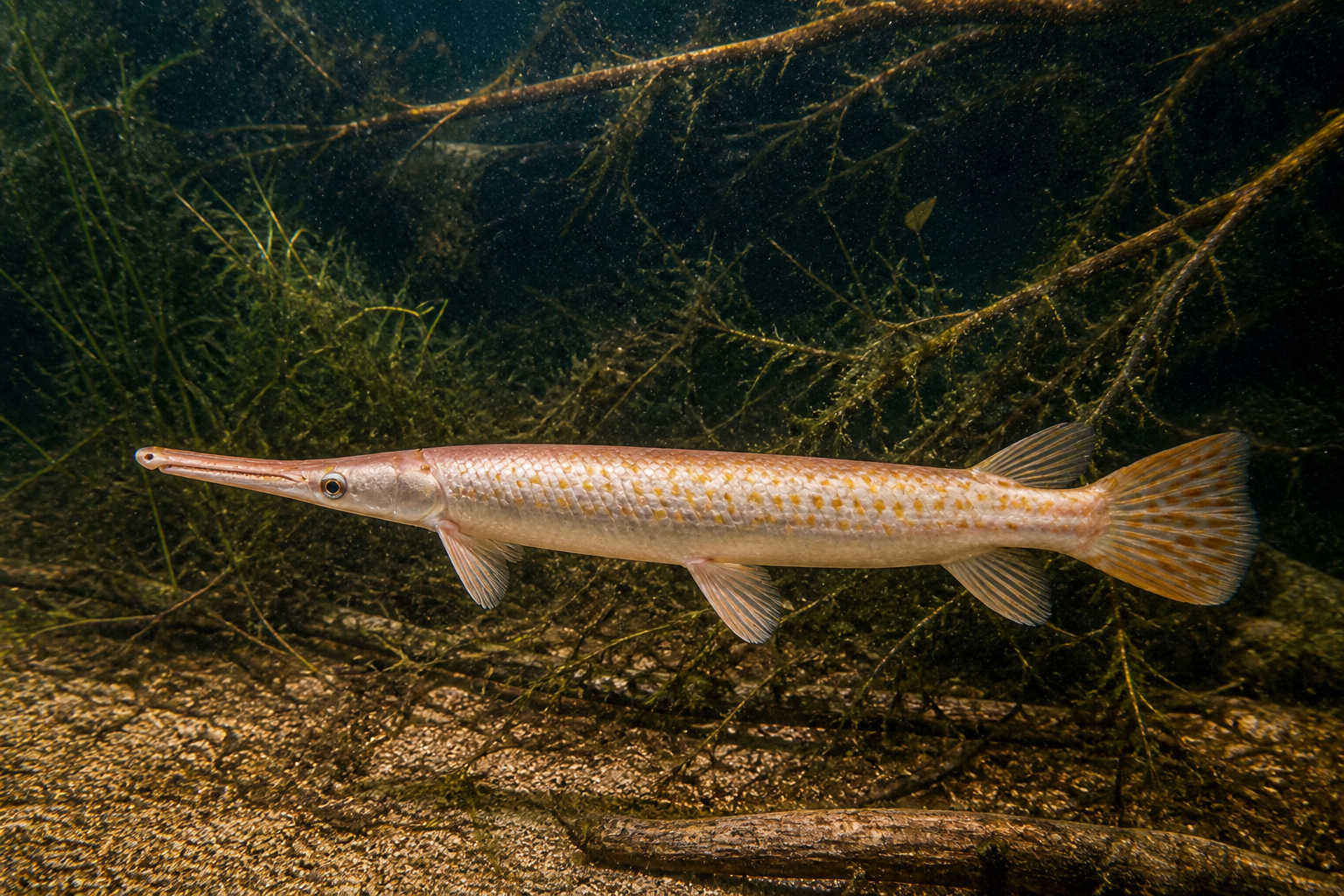
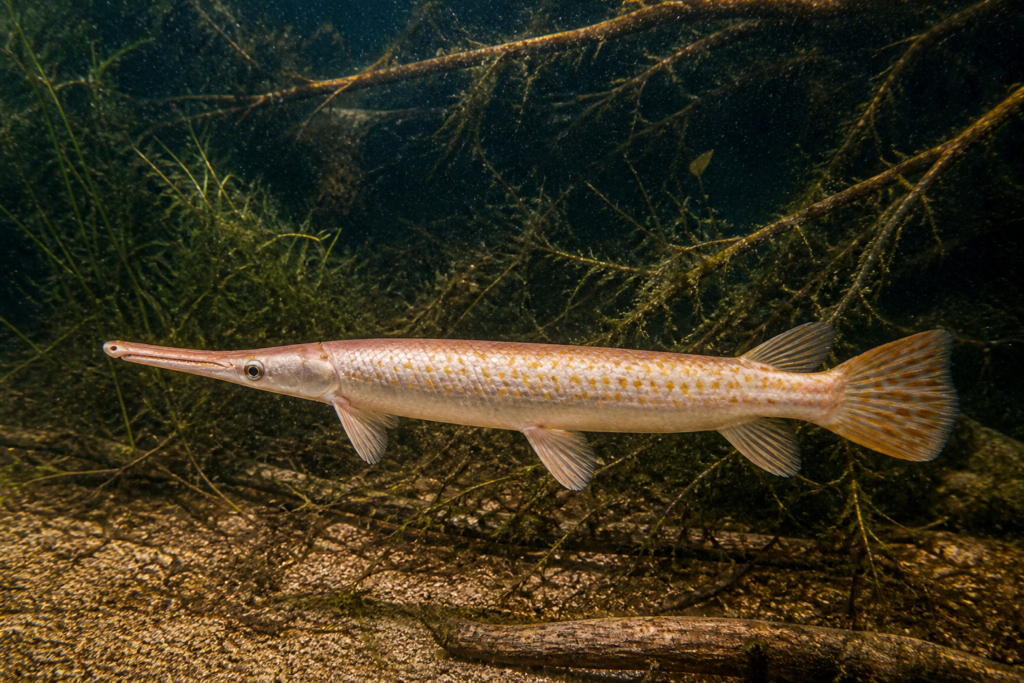
The Florida Gar (Lepisosteus platyrhincus) is a living fossil — a relict species whose lineage traces back over 100 million years. The Red Florida Gar is a colour variant with an exceptional brick-red to orange body colouration, making it one of the most visually striking predatory fish available in the UK hobby.
Gars are characterised by their elongated, heavily scaled bodies, long needle-like jaws packed with sharp teeth, and a remarkable ability to breathe atmospheric air via a highly vascularised swim bladder. This adaptation allows them to survive in stagnant, low-oxygen water — useful in the wild, and a sign of a hardy species in captivity.
Unlike many large predators, Gars are relatively undemanding in terms of water chemistry. Their main requirement is space — they are ambush predators that spend much of their time motionless near the surface before striking at prey with explosive speed.
Florida Gars are endemic to the state of Florida and southern Georgia, USA, inhabiting slow-moving rivers, lakes, swamps, and backwaters. They are found in both clear and highly tannic, dark waters. Their natural habitat is often heavily vegetated, warm, and subject to seasonal temperature variation from the low teens (°C) in winter to over 30°C in summer.
This wide thermal tolerance makes them one of the more forgiving monster fish for UK keepers, as our tap water quality is generally well-suited to their needs without extensive conditioning.
One of the Gar’s greatest assets is its adaptability. They tolerate a wide range of conditions that would stress more delicate species.
Standard external filtration rated for the tank volume, combined with 20–30% weekly water changes, is sufficient for most Gar setups.
Gars are ambush predators with a diet consisting almost entirely of fish and invertebrates in the wild. In captivity, they can be transitioned to dead/frozen foods and even large pellets, though this requires patience.
Ideal foods:
Feed 2–3 times per week for adults; daily for juveniles. Gars have a slow metabolism compared to many fish — overfeeding causes fatty liver disease. Use feeding tongs to present food directly in front of the Gar — they strike sideways with their long jaws rather than mouth-first.
Gars are generally peaceful toward fish too large to eat, making them surprisingly versatile tank mates for a monster fish.
Good choices:
Avoid:
MTF Aquatics stocks Red Florida Gar at various sizes throughout the year. The Red colour variant is rarer than standard Florida Gar — contact us to be notified when new stock arrives.
Browse our current stock — every fish ships with our Live Arrival Guarantee.
Shop Tropical FishBook a Tranship