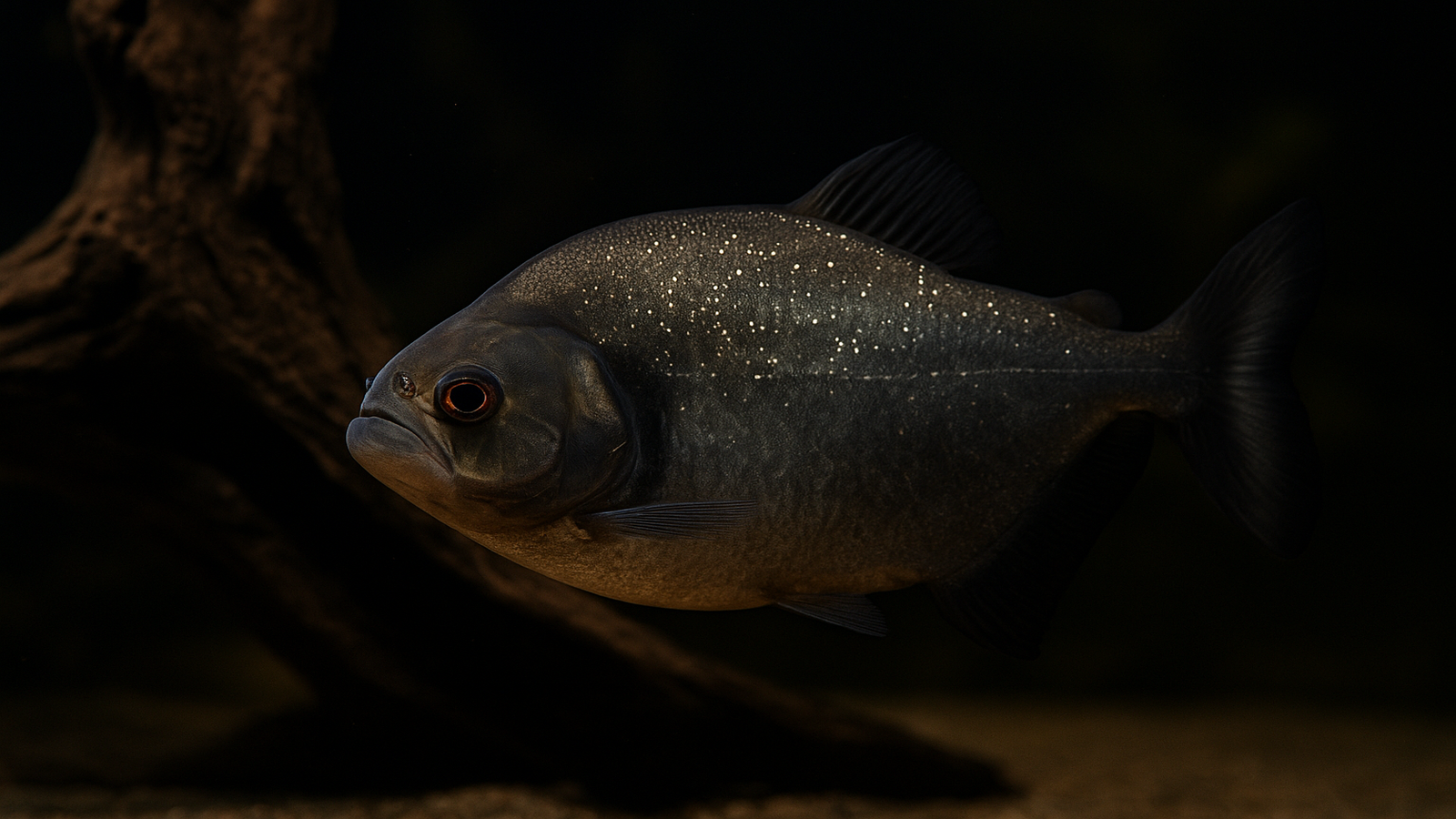
Manuel’s Piranha (Serrasalmus manueli) is one of the largest and most formidable members of the piranha family, capable of exceeding 40 cm in the wild and regularly reaching 30 cm or more in aquarium conditions. This is an uncompromising specimen fish — not a community species, not a beginner’s fish, and not a tankmate for anything else. S. manueli is a strict solitary predator that must be housed alone for its entire life. Its combination of size, raw aggression, and specific water chemistry requirements places it firmly in the expert-only category. MTF Aquatics sources these fish through direct import and auctions them occasionally as legally permitted specimens; due to CITES regulation, a permit is required at point of sale, which MTF handles transparently as part of the transaction.
Manuel’s Piranha is native to the Orinoco and upper Amazon river basins, particularly in Venezuela and Colombia, where it inhabits large, slow-moving blackwater rivers, flooded forest margins, and deep river channels. Water in these environments is typically warm, extremely soft, and highly acidic — often stained dark brown with tannins from decomposing leaf litter. Dissolved mineral content is negligible, and pH can drop well below 5.0 in certain localities. These are not pristine, well-lit waters; S. manueli is adapted to low visibility, ambient leaf debris, and submerged root structures. Replicating this chemistry in captivity is essential, not optional.
In the wild, S. manueli is primarily a fish predator and scale feeder, targeting living prey as well as scavenging opportunistically. In captivity, the staple diet should consist of whole raw fish — whitebait, smelt, and defrosted lance fish are all suitable — along with whole prawns and mussels. Earthworms are accepted by many individuals and provide good nutritional variety. Live feeder fish are unnecessary and actively discouraged: they carry disease risk and provide no benefit that high-quality frozen and fresh alternatives cannot match. Feed adults two to three times per week, removing any uneaten food promptly; S. manueli is prone to sulking for days after a large meal, and overfeeding accelerates water quality deterioration in a tank with limited biological load tolerance. Juvenile fish can be fed more frequently on smaller portions. Avoid mammalian meats such as beef heart for regular feeding — the fat content is poorly processed by this species long-term.
There are none. This is not a species that can be managed in a community context, even with fish far too large to eat. S. manueli is intensely territorial and will attack conspecifics and heterospecifics with equal ferocity. Attempts to keep it with other piranha species — even the comparatively social Pygocentrus nattereri — will result in serious injury or death. This fish must be maintained as the sole occupant of its tank, full stop. Plan the setup accordingly from the outset.
A well-maintained S. manueli is a robust fish, but several issues arise from improper husbandry. Hole-in-the-head disease (hexamitosis) is the most commonly reported problem and is almost always linked to poor water quality and nutritional deficiency — address both before reaching for medication. Soft, acidic water is genuinely critical; keeping this species in hard, alkaline tap water without treatment will result in chronic stress, colour loss, and susceptibility to bacterial infections. Use RO water remineralised to the correct parameters, or condition tap water thoroughly with peat filtration and quality blackwater extract. Lateral line erosion can also develop in tanks with excessive electrical interference from equipment — ensure all heaters and pumps are properly earthed. Note that handling or netting this fish carries genuine physical risk due to its dentition; use an appropriately sized, thick-walled container to transfer the fish rather than a net where possible, and exercise caution at all times during maintenance.
Browse our current stock — every fish ships with our Live Arrival Guarantee. Shop Tropical Fish | Book a Tranship
Browse our current stock — every fish ships with our Live Arrival Guarantee.
Shop Tropical FishBook a Tranship