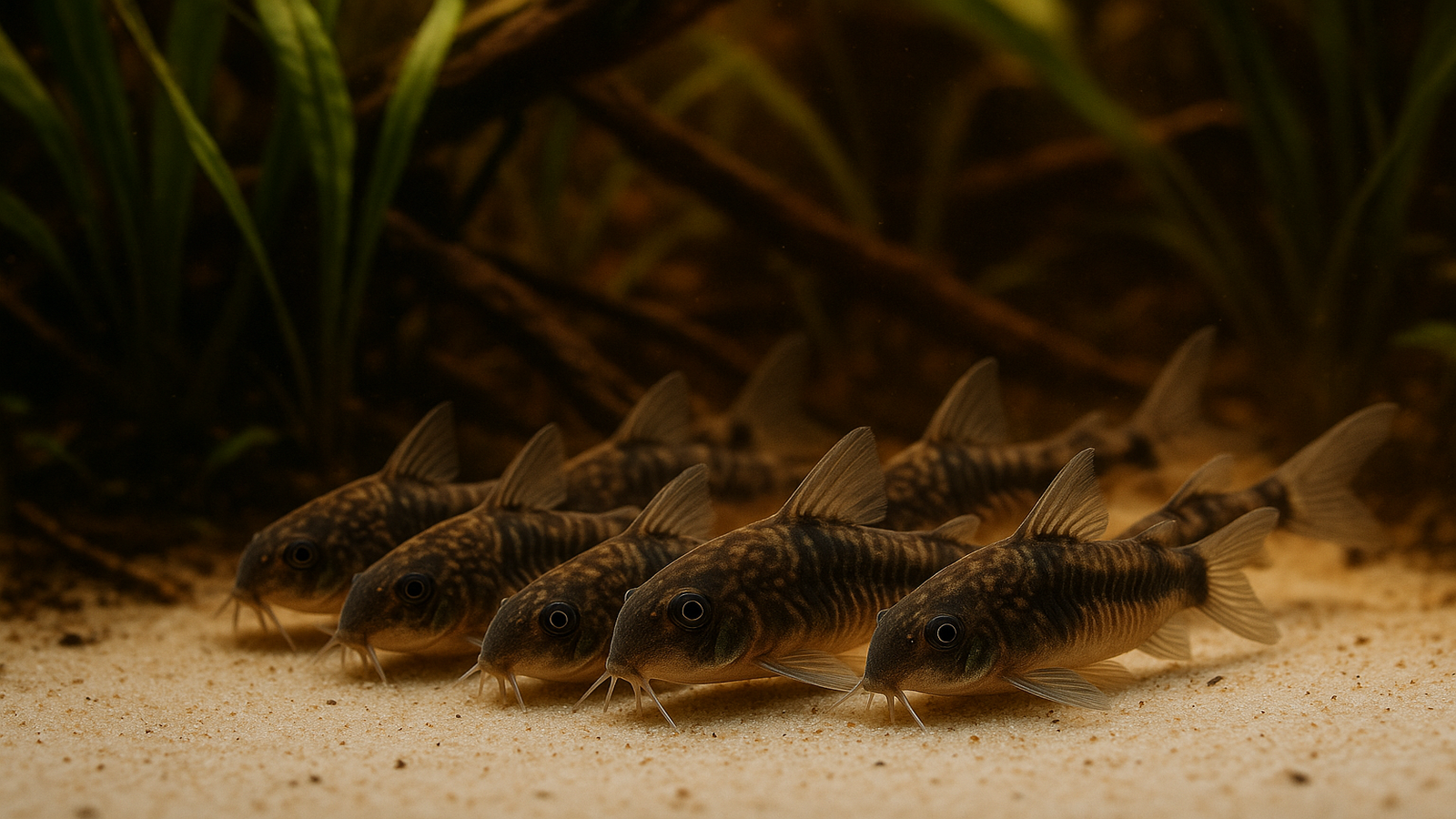
CW217 (Hoplisoma sp. aff. concolor) is an undescribed or informally catalogued corydoras carrying the CW (Corydoras World) code designation, indicating it is a species awaiting formal scientific description. Closely allied to the slate-grey Hoplisoma concolor, CW217 shares that species’ uniformly dark, near-charcoal body colouration with a subtle iridescent sheen under good lighting — a far cry from the more commonly kept spotted or banded corydoras. These are genuinely specialist fish, rarely seen in the trade, and the wild-caught specimens MTF Aquatics sources directly represent an excellent opportunity for the dedicated catfish keeper. They are not particularly difficult to maintain once settled, but their wild-caught origin demands careful acclimatisation and precise water chemistry from the outset.
The concolor group originates from the Ventuari and upper Orinoco river systems of Venezuela, as well as associated drainages in neighbouring Colombia. These are blackwater or clearwater environments characterised by soft, acidic, tea-coloured water stained with tannins from decomposing leaf litter. The substrate in their native habitats is typically fine sand or silty sediment, and the fish forage constantly along the riverbed in groups, sifting through organic detritus. Overhanging root tangles, submerged branches, and dense leaf litter provide cover. Water temperatures in these upland tropical rivers tend to be slightly cooler than many hobbyists expect for South American species.
Wild-caught specimens will not forgive elevated hardness or alkaline conditions in the way that tank-bred corydoras sometimes tolerate. If your tap water is hard, RO water blended to the appropriate parameters — or the use of peat filtration and blackwater extract — is strongly recommended. Pristine water quality is essential; these fish are highly susceptible to poor filtration during the settling-in period.
CW217 are opportunistic benthic omnivores and will accept a wide range of sinking foods once settled. High-quality sinking wafers (Hikari Sinking Wafers or similar), catfish-specific pellets, and frozen foods such as bloodworm, daphnia, and white mosquito larvae should all form part of a varied diet. Live foods — particularly tubifex or grindal worm — are extremely useful for encouraging shy wild-caught individuals to feed with confidence in the first few weeks. Avoid feeding exclusively on processed foods long-term; the addition of frozen Cyclops and brine shrimp nauplii helps maintain condition. Feed in the evening when these fish are most active and ensure food reaches the bottom before midwater tankmates intercept it.
CW217 are entirely peaceful and pose no threat to any similarly sized fish. Keep them as a group of six or more — smaller numbers lead to visible stress, reduced activity, and suppressed feeding. Suitable tankmates include small characins from compatible South American blackwater systems: cardinal tetras (Paracheirodon axelrodi), rummy-nose tetras (Hemigrammus rhodostomus), or ember tetras (Ember tetra). Dwarf cichlids such as Apistogramma species make compatible midwater companions provided territories are respected and the aquarium is sufficiently spacious. Avoid any boisterous, nippy, or predatory species. Do not house with fish requiring hard, alkaline water — the chemistry requirements are incompatible.
Barbel erosion is the most common and serious issue in corydoras kept on inappropriate substrate or in poor water quality. Inspect barbels weekly — any shortening or reddening requires immediate attention, a deep sand clean, and potential antibiotic treatment. Wild-caught fish may arrive carrying internal parasites; a preventative course of a broad-spectrum internal parasite treatment (such as Sera Nematol or equivalent) during quarantine is strongly advised. White spot (Ichthyophthirius multifiliis) can occur following the stress of import — treat at half dose with any heat-sensitive treatment given corydoras’ sensitivity. Avoid copper-based medications entirely, as corydoras, like all scaleless-adjacent catfish, are particularly vulnerable. A dedicated quarantine tank for all new arrivals — including these — is best practice without exception.
Browse our current stock — every fish ships with our Live Arrival Guarantee. Shop Tropical Fish | Book a Tranship
Browse our current stock — every fish ships with our Live Arrival Guarantee.
Shop Tropical FishBook a Tranship