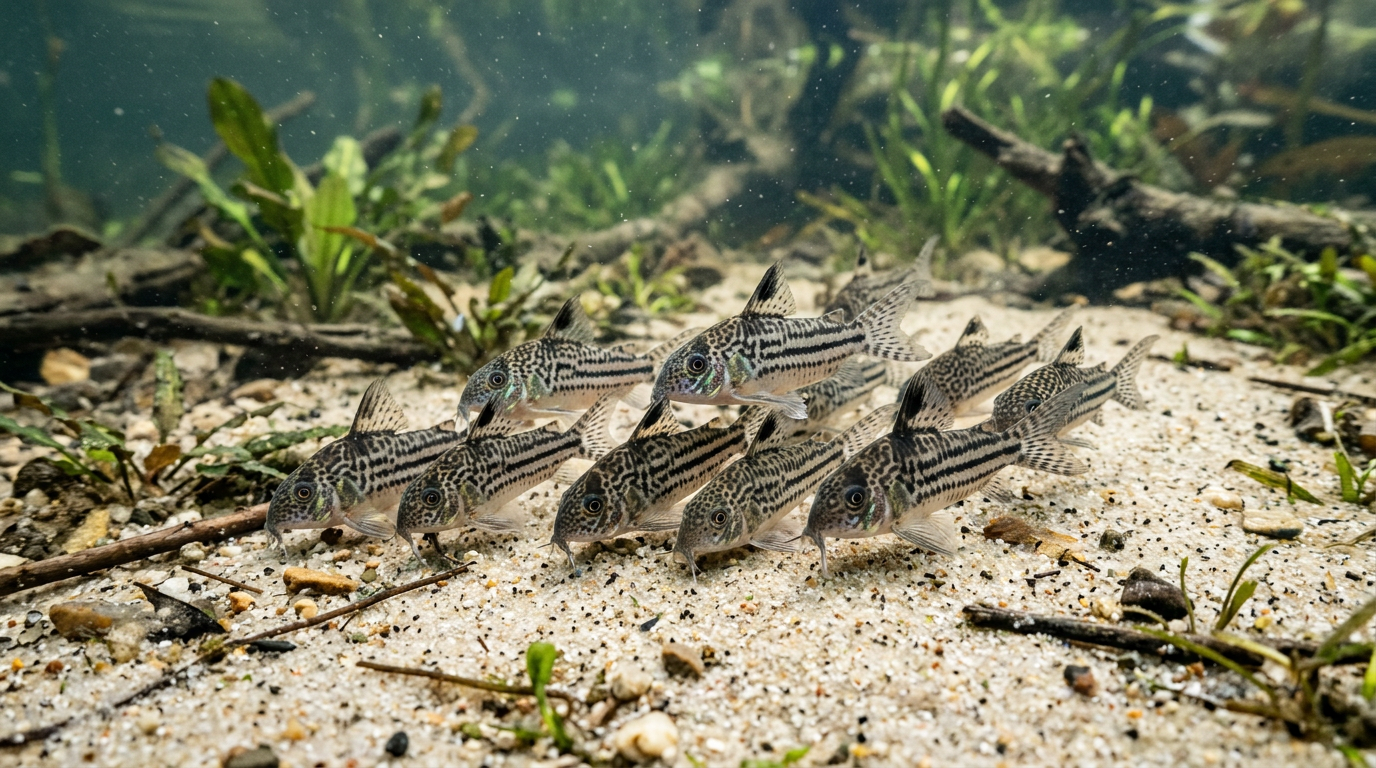
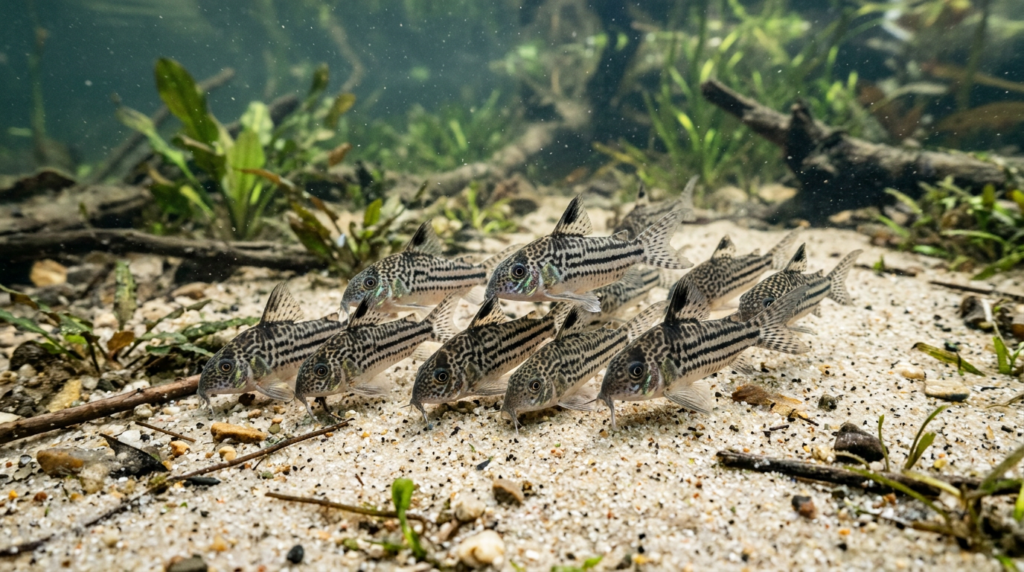
Corydoras are the quintessential aquarium catfish. Over 180 described species inhabit rivers across South America. The CW217 (Corydoras hoplisoma aff. concolor) available from MTF Aquatics is a rarer, wild-caught find for serious collectors. All Corydoras are strict schooling fish — a minimum of 6 individuals is required; larger groups of 10-20 produce natural, animated behaviour.
Temperature: 22-26 C. pH: 6.0-7.5. Hardness: 2-12 dGH. Ammonia/Nitrite: 0 ppm. Nitrate below 30 ppm. Weekly 25-30% water changes. Clean substrate is critical — barbel erosion is almost always caused by dirty substrate or elevated ammonia. Rare wild-caught species like CW217 often prefer softer, more acidic water (pH 6.0-6.8) and blackwater conditions.
Ensure food reaches the bottom — in competitive tanks, target-feed Corydoras in the evening.
Corydoras breed readily with a large water change using slightly cooler water as a trigger. Females store sperm during the T-position embrace and deposit eggs on glass or plant leaves. Eggs hatch in 3-5 days. Remove eggs to a separate container with an airstone. First foods: infusoria, micro-worm, then newly hatched brine shrimp.
Browse our current stock — every fish ships with our Live Arrival Guarantee.
Shop Tropical FishBook a Tranship