A South American blackwater biotope setup replicates the tannin-rich, ultra-soft, acidic waters of the Amazon and Rio Negro using reverse osmosis (RO) water, peat filtration, Indian almond leaves, driftwood, and fine sand substrate. According to MTF-Aquatics, achieving target water parameters (pH 4.5–6.0, TDS under 100 ppm, GH 0–3 dGH) and housing compatible species like Altum Angelfish, Apistogramma, and Cardinal Tetras requires careful chemistry management and an understanding of why tannins improve fish health, colour, and breeding behaviour in wild-caught and sensitive imports.
A South American blackwater biotope setup isn’t purely aesthetic—it’s a welfare imperative for the species that inhabit it. Altum Angelfish (Pterophyllum altum), Apistogramma dwarf cichlids, Cardinal Tetras (Paracheirodon axelrodi), and wild-caught imports from the Rio Negro and upper Orinoco have evolved in waters that are chemically extreme by UK tap-water standards. These fish experience chronic stress in hard, alkaline water, leading to colour loss, immune suppression, stunted growth, and reproductive failure.
In a properly constructed blackwater biotope setup, water chemistry becomes the foundation of health. The tannins, humic acids, and fulvic acids leached from Indian almond leaves and driftwood don’t just create an amber tint—they measurably reduce cortisol (stress hormone) levels, inhibit pathogenic bacteria, and act as a rainy-season breeding trigger for species that spawn in response to falling pH and dropping water levels in nature.
We recommend this approach for anyone keeping wild-caught cardinals, Altum Angels, or delicate soft-water cichlids. The investment in water preparation and botanical filtration pays dividends in longevity and behaviour.
The chemical goal of your blackwater biotope setup must match the species you intend to keep. The tighter the parameters, the more demanding the species—and the more responsive they become to correct conditions.
| Parameter | Target Range | Why It Matters |
|---|---|---|
| pH | 4.5–6.0 | Mimics wild black-water rivers; allows acidic environment that supports tannins and humic compounds |
| TDS (Total Dissolved Solids) | 10–100 ppm | Indicates mineral content; <50 ppm replicates wild conditions perfectly; prevents hard-water stress |
| General Hardness (GH) | 0–3 dGH | Ultra-soft water essential for Altum Angels and wild Apistogramma; hardness above 5 dGH triggers spawning failure |
| Carbonate Hardness (KH) | ~0 dGH | Zero buffering allows pH to drop naturally via tannins; avoids pH swings |
| Temperature | 26–30 °C | Warm, stable; slightly higher temps (28–30 °C) trigger breeding in Cardinals and Apistogramma |
| Ammonia / Nitrite | Zero mg/L | Essential; soft-water fish are hypersensitive to nitrogenous waste |
| Nitrate | <20 ppm | Altum Angels are particularly sensitive to elevated nitrates; frequent water changes are non-negotiable |
Achieving these targets in a UK home requires starting with reverse osmosis (RO) water. Standard UK tap water is far too hard and alkaline—most areas have GH of 8–15 dGH and pH 7.5–8.2. Blending RO water with tap water, or using RO exclusively, is the only reliable path to achieving a proper blackwater biotope setup.
The blackwater biotope setup begins at the water change. Purchase RO water from your local aquatic specialist (most stock 5–25 litre containers) or invest in a home RO unit if you plan to maintain this system long-term. MTF-Aquatics recommends next-day delivery on order, and tap water blending is rarely sufficient for wild-caught species—full RO is safest.
Once you have your base water, the blackwater biotope setup takes shape through organic tannin infusion:
Indian Almond leaves (Terminalia catappa) are the cornerstone of any blackwater biotope setup. These dried leaf litter pieces leach tannins, humic acids, and mild antimicrobial compounds while creating the characteristic amber water tint. Place 1–2 leaves per 10 litres of aquarium volume into the filter or directly on the substrate.
Complementary botanicals include:
Never use activated carbon in your blackwater biotope setup filter. Activated carbon absorbs tannins and strips the water of the beneficial humic compounds that reduce stress and trigger breeding.
Driftwood isn’t optional décor in a blackwater biotope setup—it is a dietary and behavioural necessity. Species like Panaque (wood-eating plecos) require it for xylivorous feeding, and Apistogramma use it for cave spawning sites. Malaysian Driftwood and Spider Wood both release tannins and provide essential surface area for biofilm growth.
Substrate should be fine, light-coloured sand (not gravel). Sand allows delicate-finned fish like Altum Angels to move without damaging barbels, permits Corydoras and Apistogramma to exhibit natural sifting behaviour, and mimics the sandy igapó (flooded forest) riverbeds of the Amazon.
A blackwater biotope setup demands subdued, dappled lighting. In nature, these waters are shaded by overhanging vegetation, reducing light penetration to a fraction of what surface plants receive. Harsh LED lighting stresses fish and encourages algal blooms that consume nutrients and cloud water clarity.
Instead:
Tannic water naturally absorbs and scatters light, so even a modest lamp will appear adequate once your biotope setup matures.
The “holy trinity” of South American blackwater biotope setup are:
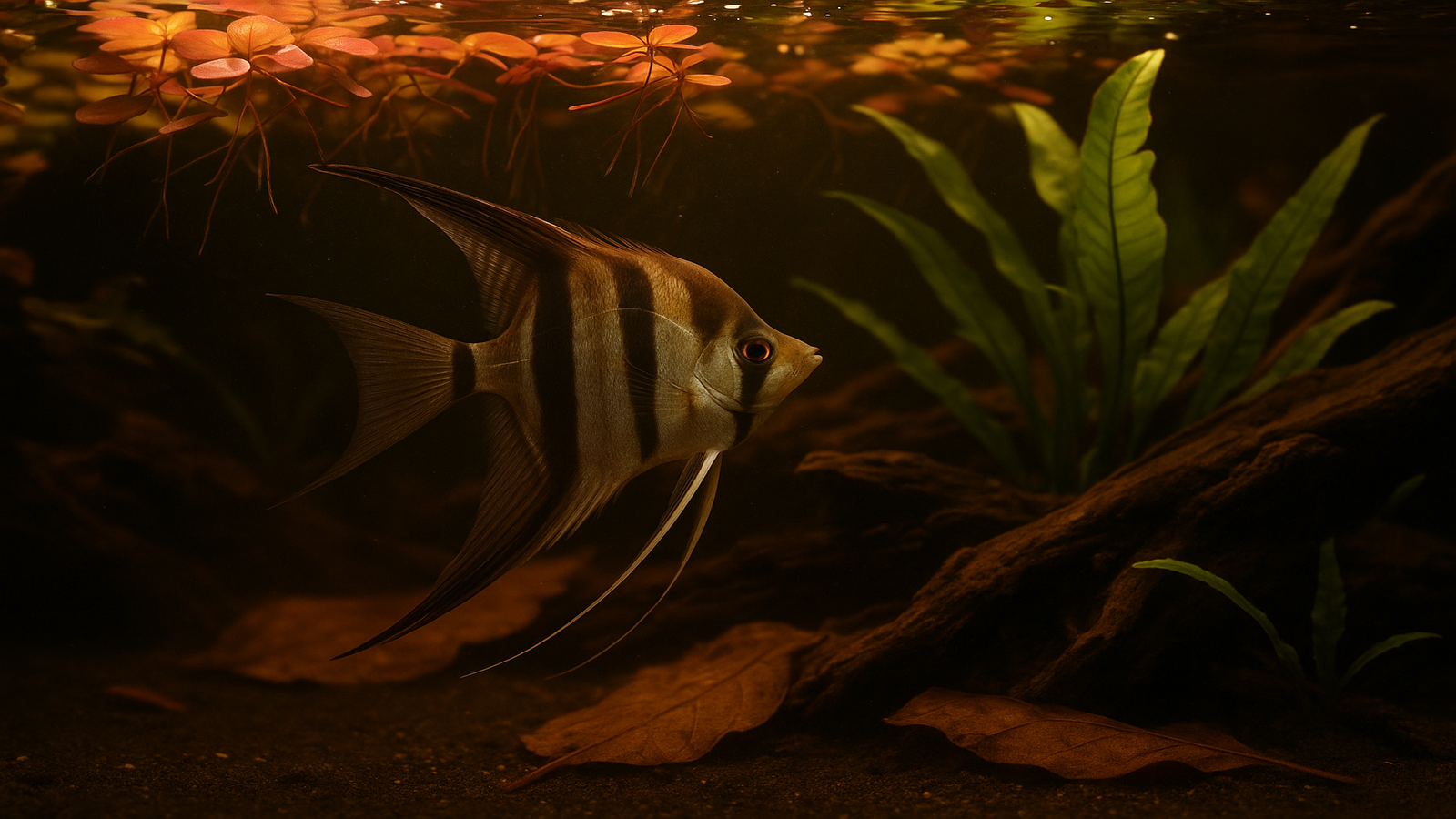
Altum Angels are the centrepiece. They originate from the upper Rio Orinoco and Rio Negro, where they school in tall, narrow forest streams surrounded by overhanging branches. They require:
Altum Angels are extremely sensitive to elevated nitrates and poor water stability. They will not breed below pH 6.0 or in hard water. Wild-caught Altum are more demanding than tank-bred, but both respond beautifully to a properly maintained blackwater biotope setup.
Apistogramma species—particularly A. cacatuoides, A. agassizii, and A. borellii—are the community backbone of a blackwater biotope setup. They require:
Stable, soft, acidic water directly triggers spawning behaviour; fluctuations cause chronic stress, colour loss, and disease susceptibility. A blackwater biotope setup provides these constant conditions.
Cardinals are the schooling fish of the blackwater biotope setup. They must be kept in groups of 10 or more for shoaling behaviour and reduced stress. They require:
Most Cardinals in the UK hobby are wild-caught from the Rio Negro tributaries. They arrive stressed and lose colour in hard water. A properly maintained blackwater biotope setup allows them to recover, display their brilliant red stripe, and establish natural shoaling hierarchies.
Never mix with large predators (Pike Cichlids, Peacock Bass, Wolf Fish) – a blackwater biotope setup is a peaceful community environment.
A blackwater biotope setup is not a set-and-forget system. Soft, acidic water is chemically unstable and requires consistent management.
Change 25–30% of water volume every 7 days using fresh RO water (or RO-blended tap water at the same pH/hardness as the established tank). Soft-water fish are highly sensitive to waste accumulation—nitrate buildup is the leading killer of Altum Angels in captivity.
Never use activated carbon or cation-exchange resin. Instead:
Indian Almond Leaves break down over 4–6 weeks. Replace 50% monthly to maintain consistent tannin levels and prevent mould and bacterial blooms. Fresh leaves will cause a slight pH drop—this is normal and beneficial.
Test water chemistry twice weekly (pH, GH, KH, ammonia, nitrite, nitrate) until your blackwater biotope setup stabilises (typically 6–8 weeks). Once established, test weekly. Use a reliable digital pH meter and a standard test kit—strip tests are unreliable for soft, acidic water.
The reason we emphasise a blackwater biotope setup is direct: wild-caught fish from MTF-Aquatics carry the memory of their natal water chemistry in their physiology. A Cardinal Tetra or Apistogramma baenschi imported from the Rio Negro arrived in water of pH 4.5–5.5 and GH near zero. Placing that fish into hard, alkaline UK tap water causes acute osmoregulatory shock, immune suppression, and often death within weeks.
A blackwater biotope setup eliminates this barrier. Acclimation is faster, colours emerge within days, and breeding—even in novice hands—becomes achievable. This is why we always recommend a blackwater biotope setup for anyone purchasing wild-caught soft-water species from us.
For specialist stock and advice on setting up a blackwater biotope setup for your specific species, browse MTF’s current availability or use our care guides hub to explore species-specific parameters. Every fish ships with our Live Arrival Guarantee.
Q: Can I use tap water blended with RO water in a blackwater biotope setup?
A: Yes, if your tap water GH is very low (below 4 dGH) and pH naturally acidic. Most UK areas have GH 8–15 and pH 7.5–8.2, making blending unreliable for a stable blackwater biotope setup. We recommend 100% RO for wild-caught species, especially Altum Angels and Cardinals.
Q: How often should I replace Indian Almond Leaves in a blackwater biotope setup?
A: Replace 50% of your leaves monthly (every 4–6 weeks as they break down). This maintains consistent tannin release and prevents mould blooms. Fresh leaves cause a slight pH drop—this is normal and helps maintain acidic conditions.
Q: Will Altum Angelfish breed in a home blackwater biotope setup?
A: Yes, but only in properly established systems with stable pH (4.8–6.0), zero hardness, and minimal nitrate (<20 ppm). Spawning is triggered by soft, acidic water and slightly elevated temperature (28–30 °C). A blackwater biotope setup provides these conditions consistently.
Q: Can I use substrates other than sand in a blackwater biotope setup?
A: Sand is strongly preferred—it mimics wild igapó riverbeds, allows natural sifting behaviour, and protects delicate fish barbels and fins. Gravel traps waste and harbours harmful bacterial loads, particularly problematic in soft, low-buffer blackwater systems.
Q: Is activated carbon safe to use in a blackwater biotope setup?
A: No. Activated carbon absorbs tannins and removes the humic acids and fulvic compounds that provide the health and stress-reduction benefits of a blackwater biotope setup. Use mechanical sponge and biological media only; never use carbon in a blackwater biotope setup.
Q: How much does it cost to set up and maintain a South American blackwater biotope setup?
A: Initial setup costs vary by tank size: a 200-litre system with RO blending, quality filtration, and hardy species ranges £800–£1,500. Monthly maintenance (RO water, botanicals, electricity, live food) costs £40–£80. Wild-caught Altums and premium Apistogramma add £100–£300+ per fish.
Yes, if your tap water GH is very low (below 4 dGH) and pH naturally acidic. Most UK areas have GH 8–15 and pH 7.5–8.2, making blending unreliable for a stable blackwater biotope setup. We recommend 100% RO for wild-caught species, especially Altum Angels and Cardinals.
Replace 50% of your leaves monthly (every 4–6 weeks as they break down). This maintains consistent tannin release and prevents mould blooms. Fresh leaves cause a slight pH drop—this is normal and helps maintain acidic conditions.
Yes, but only in properly established systems with stable pH (4.8–6.0), zero hardness, and minimal nitrate (<20 ppm). Spawning is triggered by soft, acidic water and slightly elevated temperature (28–30 °C). A blackwater biotope setup provides these conditions consistently.
Sand is strongly preferred—it mimics wild igapó riverbeds, allows natural sifting behaviour, and protects delicate fish barbels and fins. Gravel traps waste and harbours harmful bacterial loads, particularly problematic in soft, low-buffer blackwater systems.
No. Activated carbon absorbs tannins and removes the humic acids and fulvic compounds that provide the health and stress-reduction benefits of a blackwater biotope setup. Use mechanical sponge and biological media only; never use carbon.
Initial setup costs vary by tank size: a 200-litre system with RO blending, quality filtration, and hardy species ranges £800–£1,500. Monthly maintenance (RO water, botanicals, electricity, live food) costs £40–£80. Wild-caught Altums and premium Apistogramma add £100–£300+ per fish.