According to MTF-Aquatics, proper auction seller vetting is essential when buying rare fish online. Unlike equipment purchases, a dishonest fish seller doesn’t just cost money — it costs fish their lives. This guide explains the red flags, trust signals, and platform differences every UK hobbyist should know before bidding.
Unlike buying a heater or a filter, fish are living animals. A bad auction purchase doesn’t just mean a wasted £50—it means a 90cm Arowana or rare Potamotrygon arrives gasping in a non-insulated box, stressed from 24+ hours of temperature swings, only to die in your tank two days later. We’ve documented numerous cases where UK auction buyers lose both the fish and the money because they skipped auction seller vetting and didn’t know how to spot the warning signs.
The problem is that auction platforms—particularly eBay and open marketplaces—have almost no livestock-specific standards. A seller with a 99.8% rating on electronics can list fish with zero experience. They use stock photos instead of current specimens, misidentify species by one letter (causing massive compatibility issues when you bring it home), or ship without temperature-buffering gel packs, arriving DOA even though they “guaranteed” live arrival.
This is why proper auction seller vetting matters. In this guide, we explain the red flags every UK hobbyist should know, the questions to ask before you place a bid, and how curated platforms like MTF-Aquatics differ from open marketplaces.
One of the easiest auction seller vetting checks is the photo. Legitimate breeders photograph current stock in their facilities—you’ll see tank conditions, substrate, the actual fish with live markings and behaviour.
Stock photos, watermarked images pulled from Google, or blurry/old pictures suggest the seller doesn’t have the animal, or doesn’t care enough about your purchase to photograph it fresh. Even worse, they may be lifting photos from an Indonesian breeder and reselling on eBay without ever handling the fish.
What to look for: Clear, recent, high-resolution photos of the exact fish you’re bidding on, ideally with a date stamp or the breeder’s setup visible in the background.
Auction seller vetting should always include a hard look at the species name. Red flags:
Sellers who can’t correctly name a species often can’t correctly care for it either.
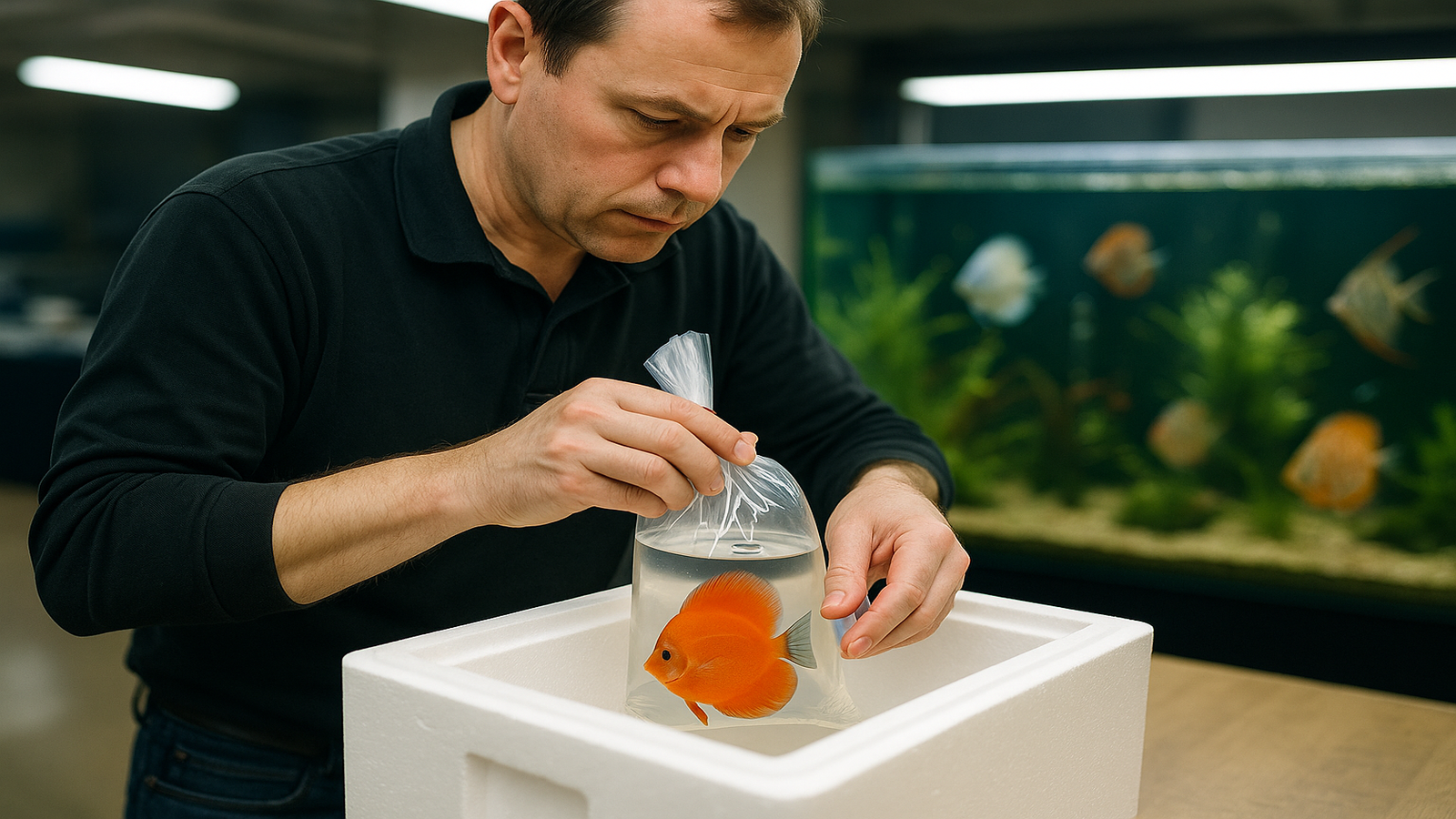
This is critical auction seller vetting for livestock. Ask: How do they ship? Do they mention specialist live-fish couriers? Gel packs or temperature buffers? Insulated packaging?
If the listing says “Royal Mail or standard parcel post,” do not bid. Royal Mail livestock shipping is risky—no temperature control, no specialist handling, and they refuse all-livestock claims under their standard T&C. Reliable auction sellers use specialist couriers like ESO Logistics, Motorbike Courier Services (MCS), or dedicated live-fish transporters who understand bag time, water temperature, and oxygen levels.
No mention of packaging = red flag. Full stop.
Proper auction seller vetting includes reading the T&C. Look for:
Legitimate sellers stand behind their livestock. MTF-Aquatics offers a Live Arrival Guarantee—if the fish arrives dead or critically stressed, we take photos within 2 hours and replace it or refund. That’s the standard a vetting-conscious buyer should expect.
Sellers hiding behind “buyer assumes risk” are either inexperienced or don’t trust their own packing and sourcing.
One of the sharpest auction seller vetting tools is checking the seller’s other listings and feedback.
Buyers buying from someone listing “Used iPhone” one week and “Rare Pleco” the next should be cautious. Opportunistic sellers jump into trending categories (rare fish are hot right now) without expertise.
Auction seller vetting also means price skepticism. A Potamotrygon Black Diamond stingray (normally £600–£1,200 from specialist breeders) listed at £99 is either:
If a price seems too good to be true, ask clarifying questions: What size? Age? Exact morph? If the seller gets vague, they’re hiding something.
Conversely, premium pricing is fine if the seller can justify it—rare morph, perfect health, known bloodline, specialist breeder with decade of history. That’s not a red flag; that’s transparency.
Before you bid, message the seller asking specific questions about water parameters they keep the fish in, feeding response, behaviour, any visible health issues, exact size, and acclimation time they recommend.
If they don’t respond, or give one-word answers, auction seller vetting is telling you: walk away. Serious breeders want you to ask. They know the right buyer will give the fish the best home. Dodgy sellers avoid detailed conversations because they can’t back up their listing.
Now that you know what to avoid, here’s what a trustworthy auction seller looks like:
Detailed species information — Latin name, wild-caught or captive-bred, exact size, temperament notes, specific water parameters they keep them in (“28–30°C, pH 6.2–6.8, soft water”), feeding habits.
High-quality current photos — Clear images from multiple angles, ideally with a timestamp or breeder’s setup visible, showing the exact specimen you’re bidding on.
Specialist shipping method — Explicit mention of live-fish courier, gel packs, insulated packaging, next-day delivery, temperature monitoring.
Live Arrival Guarantee — Clear T&C stating what happens if the fish arrives dead or stressed, and a process for claims (usually: photo within 2 hours, then replacement or refund).
Established aquarium history — Years of feedback on fish sales, zero or near-zero DOA complaints, other hobbyists endorsing them in comments, or a public breeding facility/setup they can reference.
Willingness to answer pre-bid questions — Quick, detailed responses about health, behaviour, exact size, acclimation requirements, and compatibility concerns.
Transparent pricing rationale — If asking premium, they explain why: rare morph, large size, known breeder, exclusive bloodline, etc.
We run live fish auctions, and our auction seller vetting process is built in from the start—not retroactive.
Every specimen we list has been:
This is different from open eBay auctions where the platform takes no responsibility for livestock quality. On eBay, auction seller vetting is your job—and if you get it wrong, you’re out the money and the fish is dead.
We’re fishkeepers first, retailers second. Every auction we run reflects that philosophy. If we wouldn’t buy it ourselves, we don’t auction it. And we stand behind every arrival with a guarantee.
Use this checklist before you place a bid on any auction, anywhere:
A seller who answers all 10 thoroughly has passed auction seller vetting. A seller who gives vague or evasive answers hasn’t.
eBay has massive reach and some legitimate fish sellers, but no livestock-specific standards. Auction seller vetting on eBay is entirely on you. Their buyer protection covers “item not as described,” but proving a fish was misidentified or DOA requires photos within 2 hours and is often disputed. Factor in that you’re competing with casual bidders who don’t vet at all, and prices can inflate despite red flags.
Our take: Use eBay only if you’ve thoroughly vetting the seller’s feedback and get answers to all 10 pre-bid questions.
These smaller, community-focused auction sites have more engaged buyers and often better seller reputations (because communities talk). Auction seller vetting is easier because feedback is visible and sellers often have aquarium-specific profiles.
Our take: Better than eBay, but still verify shipping method, photo currency, and Live Arrival Guarantee independently.
We vet for you. Every specimen is health-checked, correctly identified, shipped specialist, and guaranteed. No ambiguity.
Our take: Check the Auctions page to see current lots, full species data, photos, and our Live Arrival Guarantee T&C. Browse and bid with confidence—auction seller vetting is already done.
Taking 20 minutes to vet an auction seller before bidding is the difference between a thriving, healthy fish in your tank and a dead Arowana in a box. It’s the difference between supporting a genuine breeder and throwing money at an opportunist.
Auction seller vetting doesn’t require expertise—just questions, attention to photos, and common sense. Look for detail, transparency, and a seller who stands behind their livestock. Avoid vagueness, stock photos, and “buyer assumes risk” disclaimers.
If you’re tired of the guesswork, browse MTF-Aquatics auctions where we’ve done the vetting for you. Every fish is hand-selected, health-checked, and shipped with a Live Arrival Guarantee. No dodgy sellers. No dead fish. Just trustworthy sourcing and genuine care.
Q: Is buying fish from eBay auctions ever safe? A: Yes, if the seller has extensive feedback on aquatic sales, answers all your pre-bid questions in detail, mentions specialist shipping, and offers a Live Arrival Guarantee. However, eBay auctions are higher-risk than dedicated aquarium platforms or specialist auctions like MTF’s because there are no livestock-specific standards.
Q: What should I do if a fish arrives dead despite the seller’s “Live Arrival Guarantee”? A: Photograph the fish in its packaging within 2 hours (timestamp visible), then contact the seller with photos. Document the condition, packaging, and any other evidence. Reputable sellers will replace or refund; if they refuse, escalate to the platform’s dispute resolution. This is why reading the exact Live Arrival Guarantee T&C before bidding matters.
Q: How can I tell if a rare fish morph (e.g., Black Diamond Stingray) is accurately listed? A: Ask the seller for clear, side-lit photos showing the morph’s distinctive markings (Black Diamond rays have heavy black reticulation on the disc). Ask where they sourced it (from which breeder or importer). Ask the exact size and age. Morphs are expensive because they’re rare—any seller unwilling to provide proof is likely misrepresenting.
Q: Are there auction platforms in the UK better than eBay? A: AquaXchange and FinSwap have smaller, more engaged communities and typically better seller reputations. However, auction seller vetting still applies—check shipping method, photos, and guarantees independently. For maximum confidence, MTF-Aquatics auctions handle vetting for you.
Q: What if I find a great deal but the seller won’t answer my pre-bid questions? A: Don’t bid. A seller unwilling to communicate before the sale will be unresponsive after a problem arises. This is a red flag masquerading as a deal.
Q: How long should I wait before introducing an auction-sourced fish to my main tank? A: Minimum 4–6 weeks in a quarantine setup (separate tank, filtered, temperature and water-matched). Monitor for stress, signs of disease (spots, torn fins, weight loss), and feeding response. This isolates transport stress from actual health issues and protects your existing fish. Serious breeders will recommend a quarantine window—if a seller doesn’t mention it, question why.
Yes, if the seller has extensive aquatic sales feedback, answers pre-bid questions in detail, mentions specialist shipping, and offers a Live Arrival Guarantee. However, eBay auctions are higher-risk than dedicated aquarium platforms or specialist auctions like MTF’s because there are no livestock-specific standards.
Photograph the fish in its packaging within 2 hours with a timestamp, then contact the seller with photos. Reputable sellers will replace or refund. Always read the exact T&C before bidding to confirm the process and what proof is required.
Ask for clear, well-lit photos showing the morph’s distinctive markings. Ask where they sourced it and the exact size and age. Any seller unwilling to provide proof is likely misrepresenting—rare morphs command premium prices and should come with documentation.
AquaXchange and FinSwap have smaller, more engaged communities and typically better seller reputations. However, auction seller vetting still applies—check shipping method, photos, and guarantees independently. For maximum confidence, MTF-Aquatics auctions handle vetting for you.
Don’t bid. A seller unwilling to communicate before a sale will be unresponsive after a problem arises. This is a red flag masquerading as a deal.
Minimum 4–6 weeks in a separate, filtered tank matched to temperature and water parameters. This isolates transport stress from actual health issues and protects existing fish. Serious breeders recommend quarantine—if a seller doesn’t mention it, question why.