Before a single fish goes into your aquarium, the tank needs to be biologically alive. That means establishing a colony of nitrifying bacteria capable of converting toxic ammonia — produced by fish waste, uneaten food and decomposing organic matter — all the way through to relatively harmless nitrate. Until that process is stable, you are running a tank that will poison anything in it.
This is the nitrogen cycle. It is not optional, it is not something you can rush with a few water changes, and it is absolutely the foundation on which every other aspect of fishkeeping is built. If your fish are dying inexplicably, or your tank keeps crashing, a failed or incomplete cycle is almost always the starting point for the diagnosis.
This guide covers every stage — the microbiology behind it, how to cycle fishlessly (the only method we recommend), how to read your test kits correctly, why cycles stall, and what realistic UK timelines actually look like. Charterhouse’s guide tops out around 800 words. This is the one you’re going to bookmark.
The chemistry is straightforward. Fish excrete ammonia (NH₃) directly through their gills and via urine. Decomposing organic matter — dead plant material, uneaten food, faeces — also generates ammonia as it breaks down. In any volume of water, ammonia rapidly reaches toxic concentrations.
Two genera of bacteria solve this problem:
The full pathway looks like this:
Fish waste / organic matter
        ↓
     Ammonia (NH₃/NH₄⁺)  ← TOXIC
        ↓  [Nitrosomonas]
     Nitrite (NO₂⁻)      ← TOXIC
        ↓  [Nitrospira / Nitrobacter]
     Nitrate (NO₃⁻)      ← manageable via water changes
The cycle is complete when: ammonia and nitrite both read 0 ppm within 24 hours of adding an ammonia dose equivalent to your intended fish load, and only nitrate is accumulating.
Traditional “fish-in cycling” involves putting hardy fish into an uncycled tank and performing large water changes to keep ammonia and nitrite below immediately lethal levels while the bacteria establish. The fish are living in chronic sub-lethal toxicity for weeks. Gill damage, immune suppression, and shortened lifespans are the realistic outcomes even when the fish “survive” fine.
Fishless cycling is faster, more controllable, produces a larger and more robust bacterial colony, and involves zero animal suffering. There is no good argument for cycling a tank with fish in it.
There are three practical fishless cycling methods:
Use a commercially available pure ammonia source — look for clear, fragrance-free ammonia with no surfactants (it shouldn’t foam when shaken). Dr. Tim’s Ammonium Chloride or equivalent is widely available online in the UK.
Protocol: – Dose ammonia to achieve 2–4 ppm in your tank. Test immediately after dosing to confirm. – Maintain temperature at 26–28°C — warmer water significantly accelerates bacterial growth. – Ensure adequate aeration; Nitrosomonas and Nitrospira are aerobic organisms. – Test every 24–48 hours. Record your results — a spreadsheet is useful. – Once nitrite appears (typically days 5–10), continue dosing ammonia to 2 ppm every other day. Do not stop; the bacteria need a sustained food source. – When both ammonia and nitrite hit 0 ppm within 24 hours, you’re cycled.
Commercial bacterial products — Seachem Stability, API Quick Start, Tetra SafeStart — contain live or dormant nitrifying bacteria. Used alongside pure ammonia dosing, they can cut cycle time to 1–2 weeks. Used alone without an ammonia source, they die back quickly and are wasted.
The real shortcut: obtain used filter media from a healthy, disease-free established tank. A handful of mature ceramic rings or a sponge insert placed in your new filter carries millions of live bacteria. Pair this with ammonia dosing and you can have a cycled tank in under a week. This is the method Marc uses when setting up new systems here — mature media from a known-healthy tank, combined with a steady ammonia dose from day one.
Important: Only take donor media from tanks you trust completely. Introducing media from an unhealthy source is one of the fastest ways to seed disease into a new system.
Fast-growing stem plants — Hygrophila, Vallisneria, Egeria densa — consume ammonia and nitrate directly, which can make cycle readings misleading (ammonia appears to drop fast but may just be plant uptake rather than bacterial conversion). For heavily planted tanks, combine with pure ammonia dosing and test regularly. This method is less predictable and not recommended if precision matters.
Test kits are the only way to know what is actually happening in your tank. Liquid drop test kits — API Master Test Kit is the UK standard — are significantly more accurate than dip strips. Use liquid tests.
| Parameter | Target (cycling) | Target (established tank) | Danger threshold |
|---|---|---|---|
| Ammonia (NH₃/NH₄⁺) | 2–4 ppm (dosed) | 0 ppm | >0.5 ppm with fish |
| Nitrite (NO₂⁻) | Will rise then fall | 0 ppm | Any detectable level is harmful |
| Nitrate (NO₃⁻) | Will accumulate | <20 ppm (community) / <10 ppm (rays/catfish) | >40 ppm chronic stress |
| pH | 7.0–8.0 | Species dependent | <6.5 inhibits nitrification |
| Temperature | 26–28°C | Species dependent | <20°C slows bacteria markedly |
| kH (carbonate hardness) | >4 dKH | Species dependent | <3 dKH — pH crash risk |
The API nitrite test uses a pink/purple colour scale. The 0 ppm reading should be clear to very pale pink. Many fishkeepers misread a 0.25 ppm as 0 because the colour difference is subtle under certain lights. Always read under a daylight-balanced light source and compare against the fresh 0 ppm control in the test kit box.
Nitrification consumes carbonate hardness (kH), which acts as the buffering system keeping pH stable. In soft UK tap water (common in areas like the South West, parts of Scotland and Wales), or in RO-heavy setups for blackwater species, kH can crash during a cycle, sending pH below 6.5 and shutting down bacterial activity entirely. If your cycle stalls with ammonia and nitrite stuck at detectable levels, check kH. A reading below 3 dKH requires buffering — crushed coral or a dedicated buffer product — before the cycle can proceed.
Here is what real-world cycling actually looks like in the UK, accounting for domestic tap water temperatures and typical summer/winter conditions:
| Method | Typical Range | Best-case | Why it varies |
|---|---|---|---|
| Pure ammonia, no seeding | 4–8 weeks | 3 weeks | Temperature, starting bacteria levels in tap water |
| Ammonia + liquid bacteria product | 2–4 weeks | 10 days | Product quality varies significantly |
| Ammonia + mature filter media | 5–14 days | 5 days | Volume and health of donor media |
| Planted tank cycling | 4–10 weeks | 3 weeks | Plant density, species, CO₂ injection |
UK tap water averages around 10–15°C in winter. If your fish room is cold, expect the longer end of every range. Running a heater in the tank during cycling is not optional — keep it at 26–28°C.
The most common mistake: testing at day 21, seeing 0 ammonia and 0 nitrite, concluding the cycle is done without having run a 24-hour re-dose challenge. Dose ammonia to 2–3 ppm, wait 24 hours, and test again. If both are back to 0, you have a real cycle. If ammonia drops to 0 but nitrite spikes, the second bacterial colony (Nitrospira) is still establishing.
Cause: Temperature too low; pH crashed below 6.5; chloramine in tap water not neutralised; wrong type of ammonia (avoid any product containing surfactants — the foam test is essential).
Fix: Raise temperature to 28°C, check and buffer pH, re-check kH, and verify your ammonia source is clean. If you’re using tap water for top-ups, use a dechlorinator that neutralises both chlorine and chloramine — standard sodium thiosulphate-only products won’t touch chloramine, which is present in most UK mains water and is directly bactericidal.
This is the most common and most frustrating point of failure. Nitrospira establishes more slowly than Nitrosomonas, so the nitrite colony lags behind. A nitrite reading of 2–5 ppm that holds steady for 7–10 days is normal. A reading that has been high for 3+ weeks and shows no downward trend is a stall.
Fix: Stop dosing ammonia for 48 hours (remove the Nitrosomonas food source), maintain temperature and aeration, consider adding mature media or a liquid bacterial booster. Do a 50% water change to dilute nitrite and reset conditions.
Cause: The bacterial colony was sized for the ammonia dose used during cycling, but fish load exceeds that. Also common when fish are added all at once rather than staged.
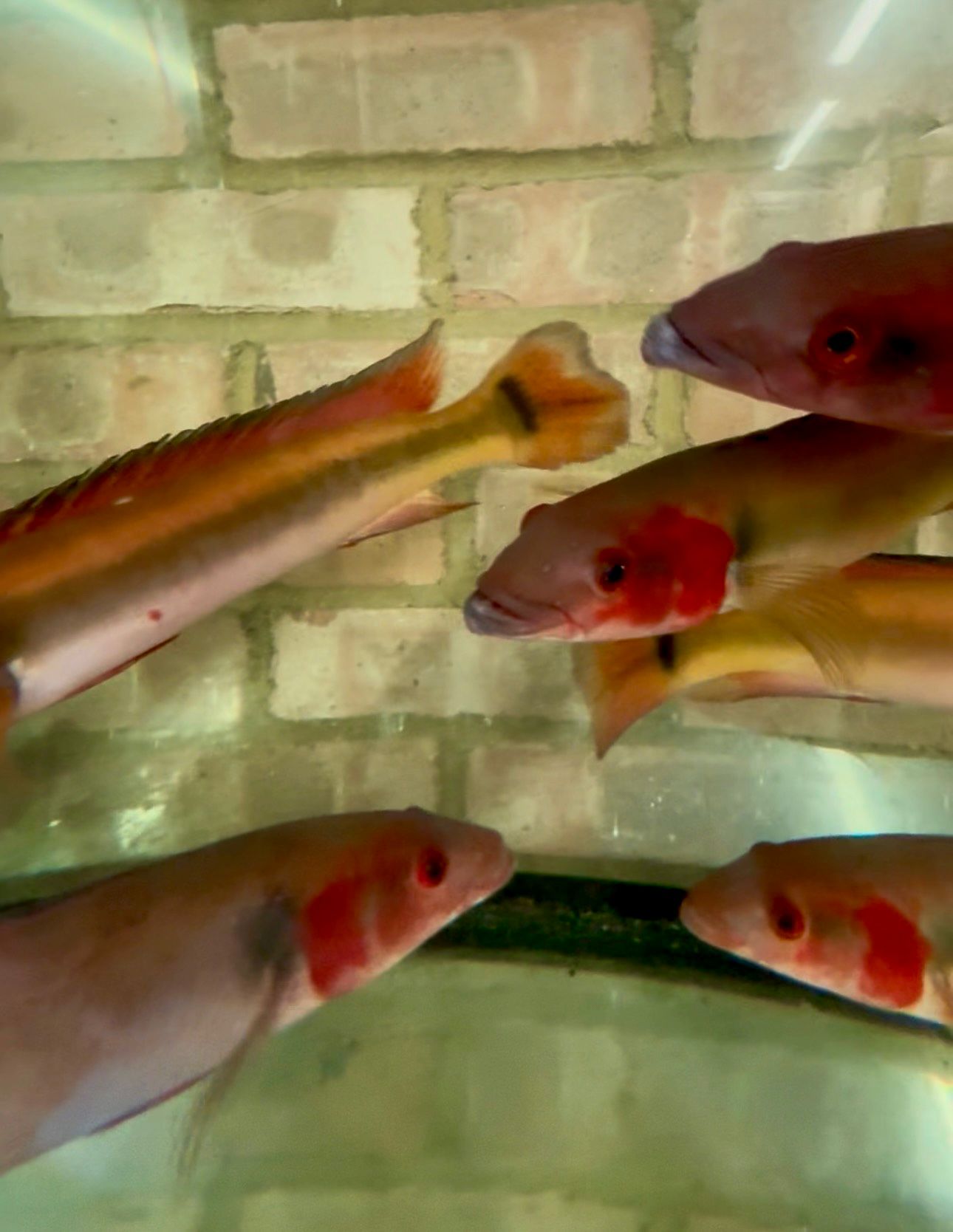
Fix: Cycle to a higher ammonia target than your intended fish load requires. If you’re planning to keep large predators — a 13-inch Red Atabapo Pike Cichlid (Crenicichla sp.) produces a substantially higher waste load than a community fish — cycle to 4–5 ppm before introducing the first animal.
Cause: Often ammonia from tap water. Several UK water companies add small amounts of chloramine, which breaks down into ammonia and chlorine. A good liquid ammonia test will pick this up — if your “0 ppm” tap water reads 0.25–0.5 ppm, that’s your baseline. Use RO water or a more comprehensive dechlorinator.
If you’re setting up a monster fish system — stingrays, large cichlids, bichirs, arowana — the stakes are higher and the tolerances tighter.
Freshwater stingrays (Potamotrygon spp.) are among the most ammonia and nitrite-sensitive fish in the hobby. They should not enter any system where nitrite or ammonia is detectable, even at 0.25 ppm. Rays also have a significant waste load, so cycle to at least 4 ppm and run a second 24-hour challenge test before considering them. Many experienced ray keepers run 0 nitrate target systems using heavy water change schedules — 50% twice weekly is not unusual.
Large catfish and L-number plecos — including wild-caught Panaque and Corydoras species — are robust enough for a well-established system but any remaining ammonia or nitrite from a marginal cycle will compromise newly imported wild-caught fish that arrive already stressed from transport.
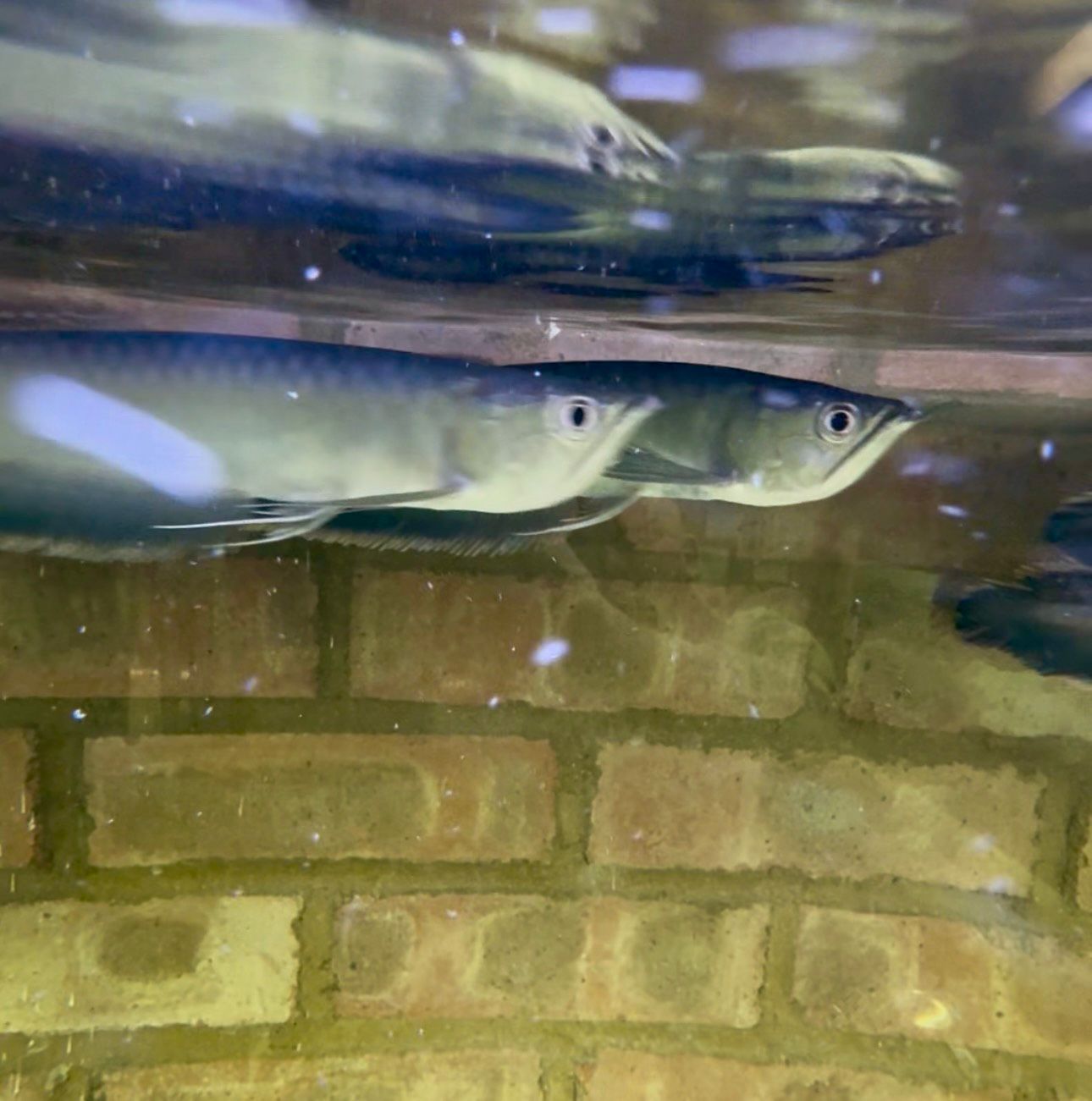
Arowana and gar are surprisingly tolerant of elevated nitrate, but both are sensitive to the acute stress of ammonia and nitrite exposure at the time of introduction, particularly as juveniles. A crashed cycle in an arowana system can trigger jump responses — which in a tank with a loose-fitting lid means a dead fish on the floor.
The cycle is not a one-time event. It requires ongoing management:
Test kits expire. API and similar liquid tests are reliable for 3–5 years if stored in a cool, dark place, but the nitrite and ammonia reagents degrade once opened. If your readings don’t match expected patterns — particularly if you’re getting 0 ammonia during week one when you’ve definitely dosed — check the expiry date and run a control test with a known reference solution.
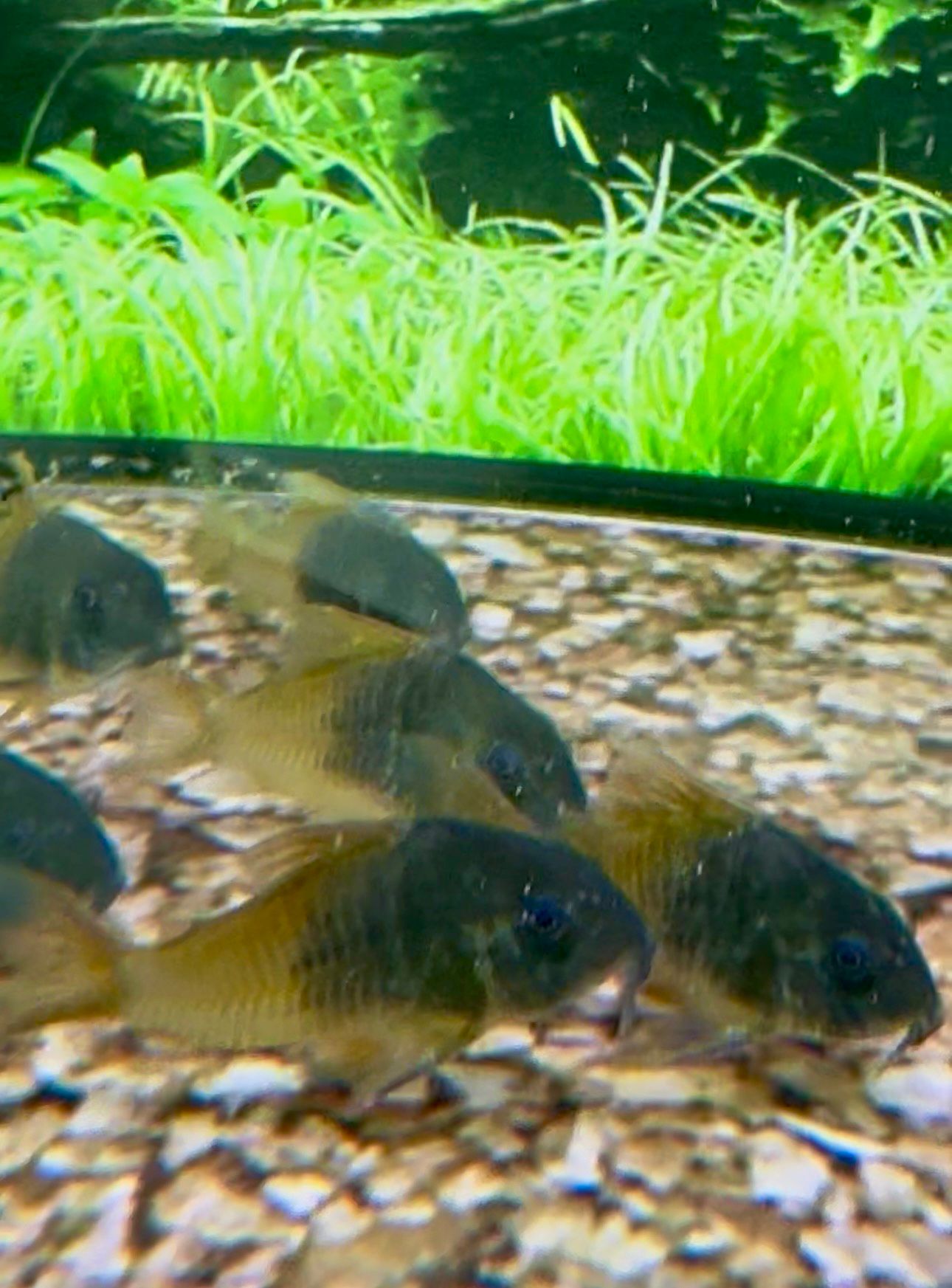
Every fish in our stock — from wild-caught Corydoras hoplisoma CW217 through to the Snow White Pearl Stingray or Black Arowana (Osteoglossum ferreirai) — has been health-checked and conditioned before it leaves us. That work is wasted if it arrives into an uncycled or unstable tank. The cycle is our side of the partnership; the tank is yours.
When you are genuinely confident your tank is cycled — ammonia 0, nitrite 0, nitrate accumulating, 24-hour challenge passed — that is when to start thinking seriously about what lives in it.
Browse our current stock — every fish ships with our Live Arrival Guarantee. If you are not sure whether a species suits your setup or your cycle is ready, ask us before ordering. We would rather lose a sale than help set someone up for failure.
Browse our tropical fish | View current auctions