According to MTF-Aquatics, cycling an aquarium means establishing colonies of Nitrosomonas and Nitrospira bacteria that convert toxic ammonia → nitrite → nitrate before any fish are added. UK hobbyists should allow 4–8 weeks for a fishless cycle, dose ammonia to 2–4 ppm, and dechlorinate tap water thoroughly — chloramine (common in UK municipal supplies) kills nitrifying bacteria on contact.
The nitrogen cycle is the biological foundation of every aquarium. Without it, waste from fish — and from uneaten food, decaying plant matter, and the fish themselves — accumulates as ammonia (NH₃), a compound that damages gill tissue, suppresses the immune system, and kills fish at concentrations that are invisible to the naked eye.
Most new hobbyists lose fish in the first month. In the vast majority of cases, the cause is an uncycled or partially-cycled tank. Understanding the chemistry — and doing the UK-specific groundwork correctly — is the difference between a thriving aquarium and an expensive, demoralising failure.
The nitrogen cycle in an aquarium involves two key groups of nitrifying bacteria:
Both species are obligate aerobic chemoautotrophs — they need oxygen, a stable pH, and a consistent food source (ammonia) to establish and grow. They are slow reproducers: a single cell divides roughly every 10–24 hours, which is why cycling takes weeks, not days.
| Parameter | Toxic Threshold | Safe Level (Fish Present) | Notes |
|---|---|---|---|
| Ammonia (NH₃) | > 0.25 ppm | 0 ppm | More toxic at higher pH |
| Nitrite (NO₂⁻) | > 0.25 ppm | 0 ppm | Disrupts oxygen transport in blood |
| Nitrate (NO₃⁻) | > 40 ppm | < 20 ppm | < 10 ppm for sensitive species |
Ammonia toxicity is pH-dependent: at pH 8.0, a reading of 1 ppm ammonia is significantly more dangerous than at pH 7.0, because a higher proportion is the un-ionised NH₃ form — which crosses gill membranes directly. This matters enormously if you’re preparing a tank for African Cichlids or Arowana, which often prefer higher pH values.
Fishless cycling is the only ethical method for a brand-new setup. You dose ammonia into an empty tank, allow the bacterial colonies to establish, and only introduce livestock once both ammonia and nitrite read 0 ppm on consecutive days.
Step-by-step fishless cycle:
Typical timeline: 4–6 weeks at 25 °C. Up to 8 weeks if your home is cool or if you’re cycling a large-volume system (300+ litres).
Fish-in cycling — adding fish before the biological filter is established — is high-risk and should be a last resort. If you’ve inherited a tank with fish and no established filter, or bought fish before cycling is complete, manage it with:
Fish-in cycling still takes 4–8 weeks. You are not accelerating the process — you are just keeping the fish alive during it.
This is where the majority of UK hobbyists come unstuck, and where generic advice from US-centric cycling guides fails them entirely.
Most UK water suppliers — including Thames Water, Anglian Water, Severn Trent, and United Utilities — now use chloramine rather than chlorine as a disinfectant. Unlike chlorine, which off-gasses within 24 hours of standing water or is neutralised by sodium thiosulphate, chloramine is chemically stable and does not evaporate.
If you’re using a standard dechlorinator (cheap sodium thiosulphate drops), it will neutralise the chlorine component but leave chloramine intact. That residual chloramine will continuously kill your nitrifying bacteria. Your cycle will appear to stall or reset — and you won’t know why.
Solution: Use a dechlorinator specifically formulated to neutralise chloramine. Look for products containing sodium hydroxymethanesulphinate as the active ingredient — Seachem Prime is the most widely available in the UK and is cost-effective at the recommended dose rate.
UK tap water hardness varies enormously by region. London and the South East supply hard to very hard water (> 15 dGH, pH 7.5–8.2). Scotland, Wales, and South West England are typically soft to moderately soft (< 6 dGH, pH 6.8–7.4).
| UK Region | Typical pH | Typical Hardness (dGH) | Cycling Impact |
|---|---|---|---|
| London / SE England | 7.5–8.2 | 15–25 | Good for cycling; ammonia more toxic |
| Midlands | 7.0–7.8 | 8–15 | Neutral — standard advice applies |
| North West England | 7.0–7.5 | 5–10 | Fine for most species |
| Scotland / Wales | 6.5–7.2 | 1–6 | May need pH buffering for efficient cycling |
| South West England | 6.8–7.4 | 3–8 | Soft — consider RO blend for hard-water species |
Nitrifying bacteria are most efficient at pH 7.2–8.0. In very soft, acidic Scottish or Welsh tap water (pH < 7.0), the cycle may stall or run extremely slowly. A small amount of crushed coral or aragonite in a mesh bag in the filter will raise pH naturally and stabilise carbonate hardness (KH) without overshooting.
For species that specifically require soft, acidic blackwater conditions — wild-caught Corydoras, Apistogramma, discus — you’ll be running RO water blended with tap, and cycling in RO needs a dedicated mineral buffer to provide the carbonate hardness that bacteria need.
These methods genuinely compress the timeline. In order of effectiveness:
Seeded filter media — A sponge, biomedia, or filter sponge from a running, healthy tank is the single fastest shortcut. Two weeks of running is often enough to establish a fully cycled tank. Ask your LFS or a hobbyist in your local fish-keeping group.
Bottled bacteria products — Tetra SafeStart, API Quick Start, and Seachem Stability all work to varying degrees. They do not replace cycling, but they can reduce the timeline by 1–2 weeks. Store them correctly (refrigerator once opened) and use fresh stock — expired product contains dead bacteria.
Temperature — Keep the tank at 25–27 °C throughout the cycle. Every degree below 20 °C meaningfully slows bacterial reproduction. If your home drops to 16 °C at night in winter, your cycle may stall completely.
Consistent ammonia source — Don’t let the ammonia drop to 0 ppm and stay there for days. The bacteria starve. Re-dose daily to maintain 1–2 ppm throughout the cycle.
Surface agitation — Nitrifying bacteria are obligate aerobes. Good surface movement and strong filter flow (at least 5x tank volume per hour turnover) ensures oxygen saturation stays above 7 mg/L.
| Symptom | Likely Cause | Fix |
|---|---|---|
| Ammonia rises but nitrite never appears | Temperature too low, or chloramine issue | Raise to 26 °C; switch to chloramine dechlorinator |
| Nitrite rises but won’t fall | Insufficient Nitrospira colonisation | Add seeded media; keep dosing ammonia; wait |
| Both readings reset after a water change | Chloramine in tap water killing bacteria | Use Seachem Prime or equivalent; dose double on changes |
| Cycle appeared complete, fish causing spike | Overstocked too fast | Add fish in stages; do 30% water change; monitor daily |
| Cycle runs > 10 weeks with no conclusion | pH too low; dead/old bacterial supplement | Buffer pH to 7.4; use fresh live bacteria product |
The cycle is complete when:
Only then is your tank ready for fish.
If you’re planning to keep sensitive species — freshwater stingrays (Potamotrygon spp.), wild-caught Arowana, or large predators that produce significant bioload — we’d recommend running the cycle for a further week after passing this test, and introducing fish gradually in small groups spaced 2–3 weeks apart.
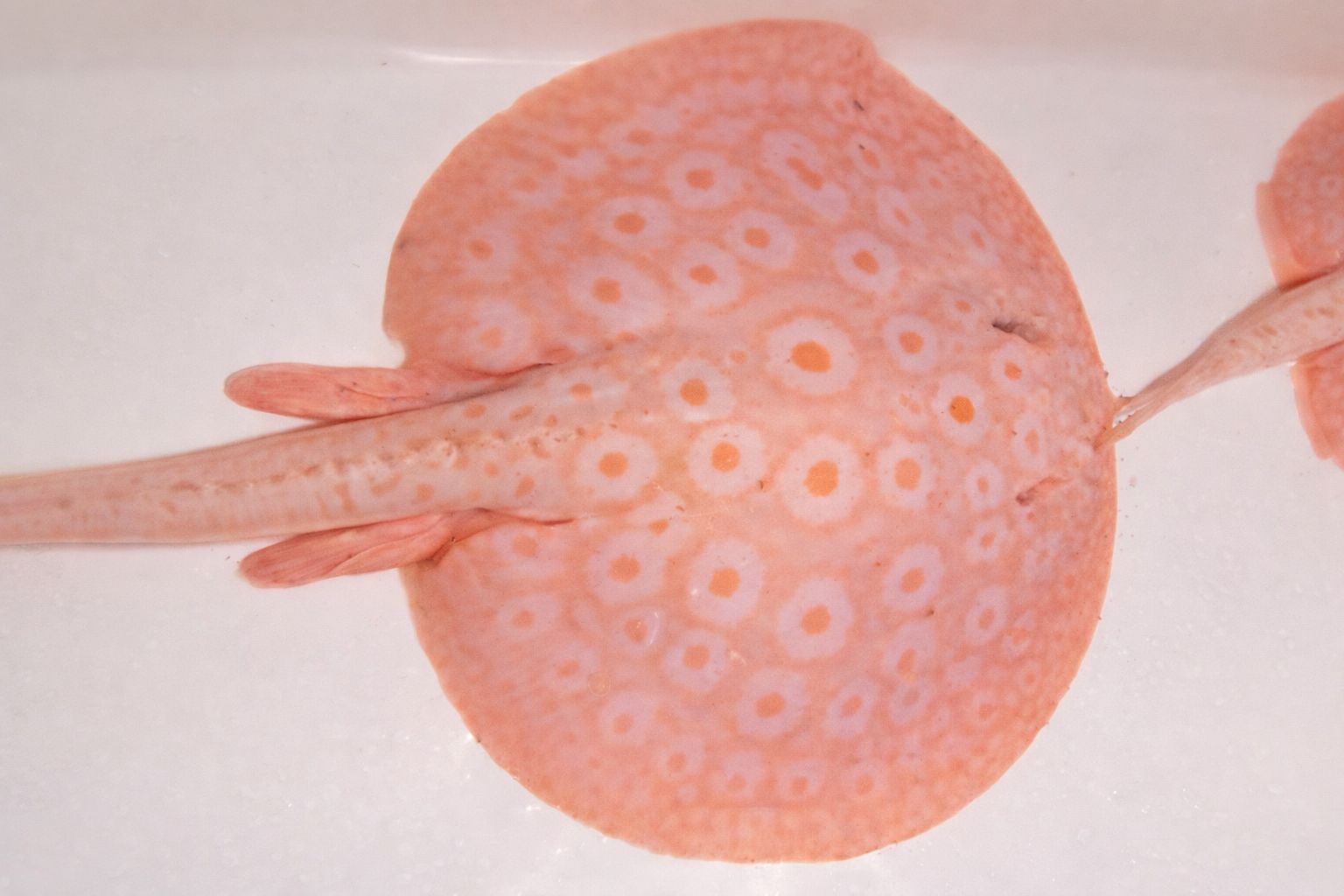
Stingrays in particular are notoriously sensitive to nitrite — even trace levels (0.1 ppm) will cause stress and feeding strikes in a tank that a hardier fish would handle without visible signs. A fully matured filter running for 6–8 weeks before introducing a ray is not overcaution — it’s the minimum.
A correctly cycled tank is the foundation every rare fish in our catalogue depends on. The Black Arowana (Osteoglossum ferreirai) we stock requires not just a cycled tank but a large, stable one — minimum 6 × 2 × 2 ft (680 litres) with pristine water chemistry from day one. The Hoplias aimara (Giant Wolf Fish) generates enormous bioload and demands a heavily over-filtered, fully established biological system before introduction.
Taking 6–8 weeks to cycle properly isn’t delay — it’s the setup that makes a £250 specimen fish a long-term success rather than an expensive casualty.
Browse our current stock of rare tropical fish — every animal ships on next-day specialist live-fish courier with our Live Arrival Guarantee. When your cycle is complete and your water parameters are stable, we’ll be here.
Marc and the MTF team are fishkeepers first, retailers second. If you have questions about your cycle, water parameters, or which species are right for your setup, get in touch before you buy.
A fishless cycle typically takes 4–8 weeks at 25–27 °C. Fish-in cycling takes the same duration but at much higher risk to the animals. Using a seeded filter sponge or established filter media from a trusted source can compress this to 1–2 weeks. Colder UK homes in winter can extend the timeline significantly — nitrifying bacteria stall below 16 °C.
Use pure household ammonia (no surfactants or fragrance — check the ingredients list) or commercially sold aquarium ammonia. Dose to reach 2–4 ppm as measured with a liquid test kit (not strips). API Freshwater Master Test Kit is the standard benchmark in the UK hobby. Avoid fish food as an ammonia source — it produces inconsistent readings and introduces other compounds.
Yes — significantly. Many UK municipal water supplies use chloramine rather than chlorine. Standard sodium thiosulphate dechlorinators neutralise chlorine only; chloramine requires a product containing sodium hydroxymethanesulphinate (e.g. Seachem Prime or API Stress Coat). Chloramine persists in the water and will continuously kill nitrifying bacteria, stalling your cycle indefinitely if not properly neutralised.
A stalled cycle occurs when ammonia or nitrite readings plateau and stop falling for more than 5–7 days. Common causes: water temperature below 20 °C, pH below 7.0 (nitrifying bacteria are less efficient in acidic water), chloramine not neutralised, or insufficient ammonia as a food source. Raise temperature to 25–27 °C, check pH is 7.2–7.6, re-dose ammonia to 2 ppm, and add a double dose of chloramine-neutralising dechlorinator.
A cycled aquarium should read: ammonia 0 ppm, nitrite 0 ppm, and nitrate below 20 ppm before adding fish. For sensitive species such as freshwater stingrays (Potamotrygon spp.) or wild-caught Arowana, target nitrate below 10 ppm at all times. Regular partial water changes of 20–30% weekly are the primary tool for managing nitrate long-term.
At MTF-Aquatics, we recommend against adding fish before ammonia and nitrite both read 0 ppm on back-to-back daily tests. Elevated ammonia and nitrite cause gill damage, immune suppression, and long-term health problems even if fish survive short-term exposure. The only exception is an emergency fish-in cycle using daily 30–50% water changes and a chloramine-safe dechlorinator — and even then, monitor readings twice daily.