The Loricariidae family — commonly known as armoured catfish or plecos — contains over 800 described species and represents one of the most diverse fish families in the world. Among hobbyists, the “L-number” system (introduced by German aquarists in the 1980s) is used to catalogue undescribed or newly discovered species, giving each a number such as L190 (Royal Pleco) or L191 (Large-spotted Royal Pleco).
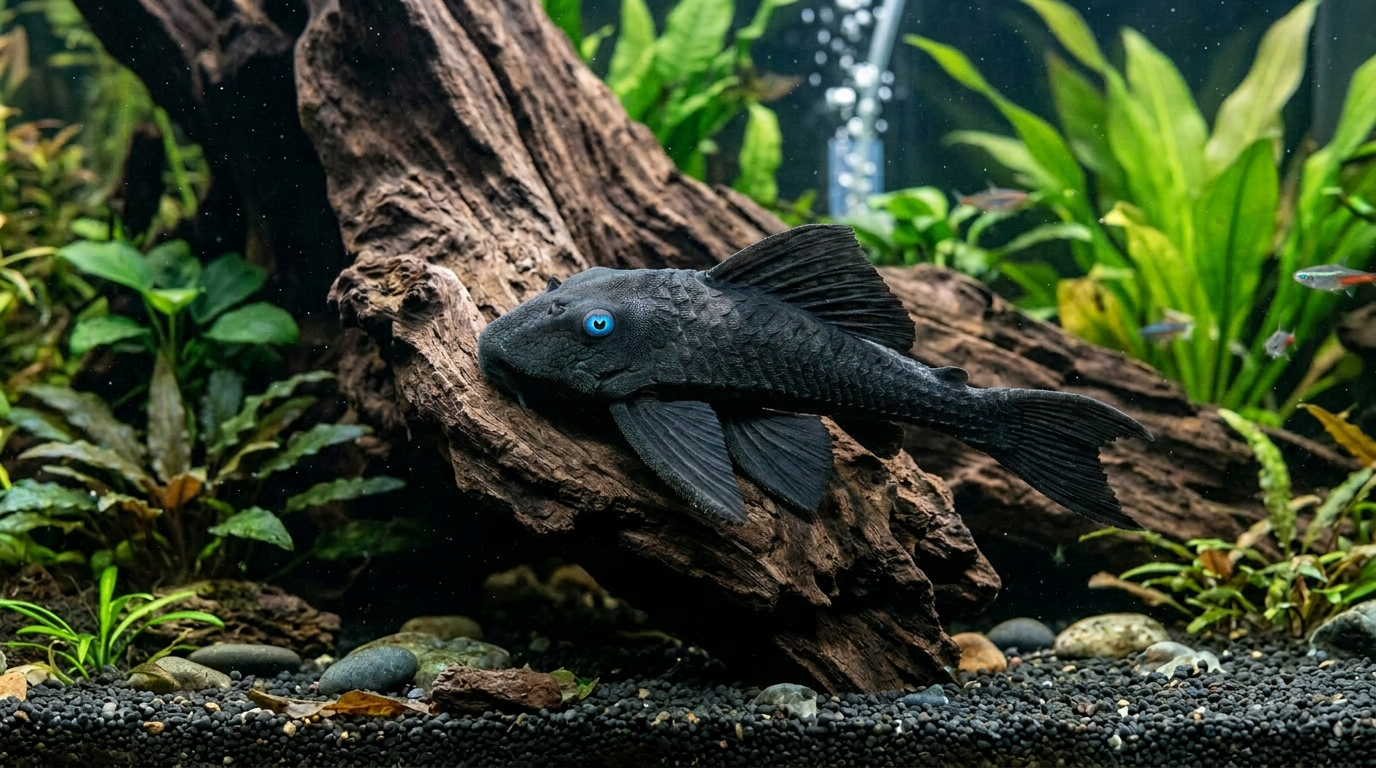
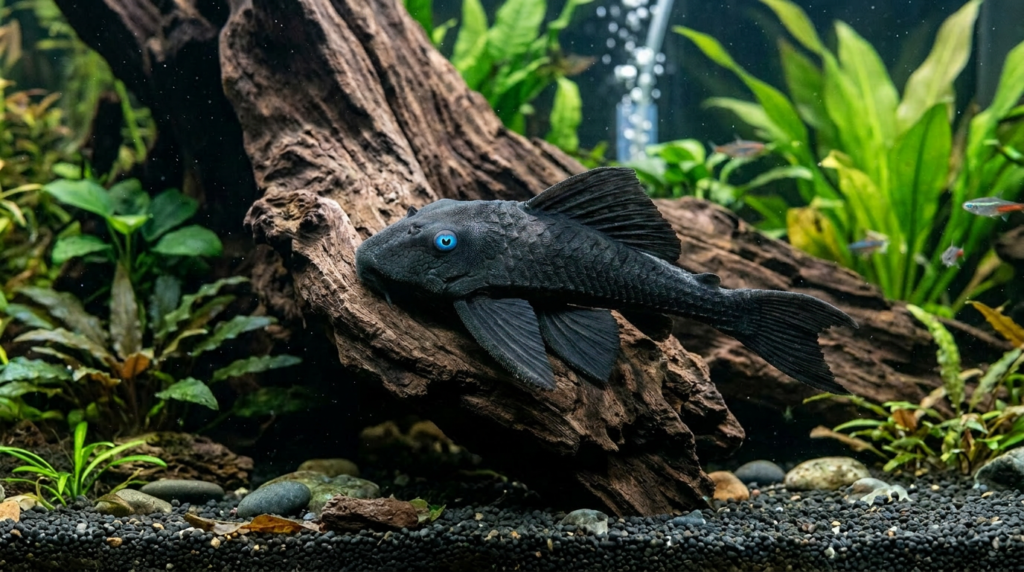
Royal Plecos (Panaque nigrolineatus complex) are among the most impressive and desirable of all plecos — large, boldly patterned catfish with vivid red eyes and distinctive wood-eating habits. The Suttoni Blue Eye Panaque (Panaque cf. nigrolineatus “Suttoni”) is particularly sought after for its electric blue eye colouration and striking dark patterning.
These are long-lived, intelligent fish that form a strong bond with their owners. A well-kept Royal Pleco can live for 20+ years and become a true centrepiece of a large aquarium.
Royal Plecos and Panaque species inhabit the fast-flowing, oxygen-rich rivers and streams of the Orinoco, Amazon, and their tributaries. They are typically found clinging to submerged wood in areas with significant current — their sucker-mouth allows them to hold position in powerful water flow while rasping wood and biofilm.
Uniquely among fish, Panaque species are xylivorous — they actually digest wood using specialised gut bacteria, making driftwood an essential part of their diet rather than just décor.
Royal Plecos are primarily herbivores and wood-eaters. Their diet in captivity should reflect this.
Ideal foods:
Royal Plecos are primarily nocturnal feeders. Drop food into the tank shortly before lights-out for best results. Vegetables should be removed after 24 hours to avoid fouling the water.
Royal Plecos are generally peaceful toward fish that occupy different areas of the tank, but can be territorial toward other bottom-dwelling fish, especially other plecos.
Good choices:
Avoid:
Breeding Panaque species in captivity is challenging but has been achieved. They are cave spawners — the male guards and fans the eggs in a tight cave. Conditioning requires very high water quality, temperature consistency, and abundant food. Successful breeding is a notable achievement among pleco enthusiasts.
MTF Aquatics regularly stocks Royal Plecos (L190), L191, Suttoni Blue Eye Panaque, and a rotating selection of rare L-numbers from our transhipping network. Stock sells quickly — contact us or pre-order for the next tranship.
Browse our current stock — every fish ships with our Live Arrival Guarantee.
Shop Tropical FishBook a Tranship