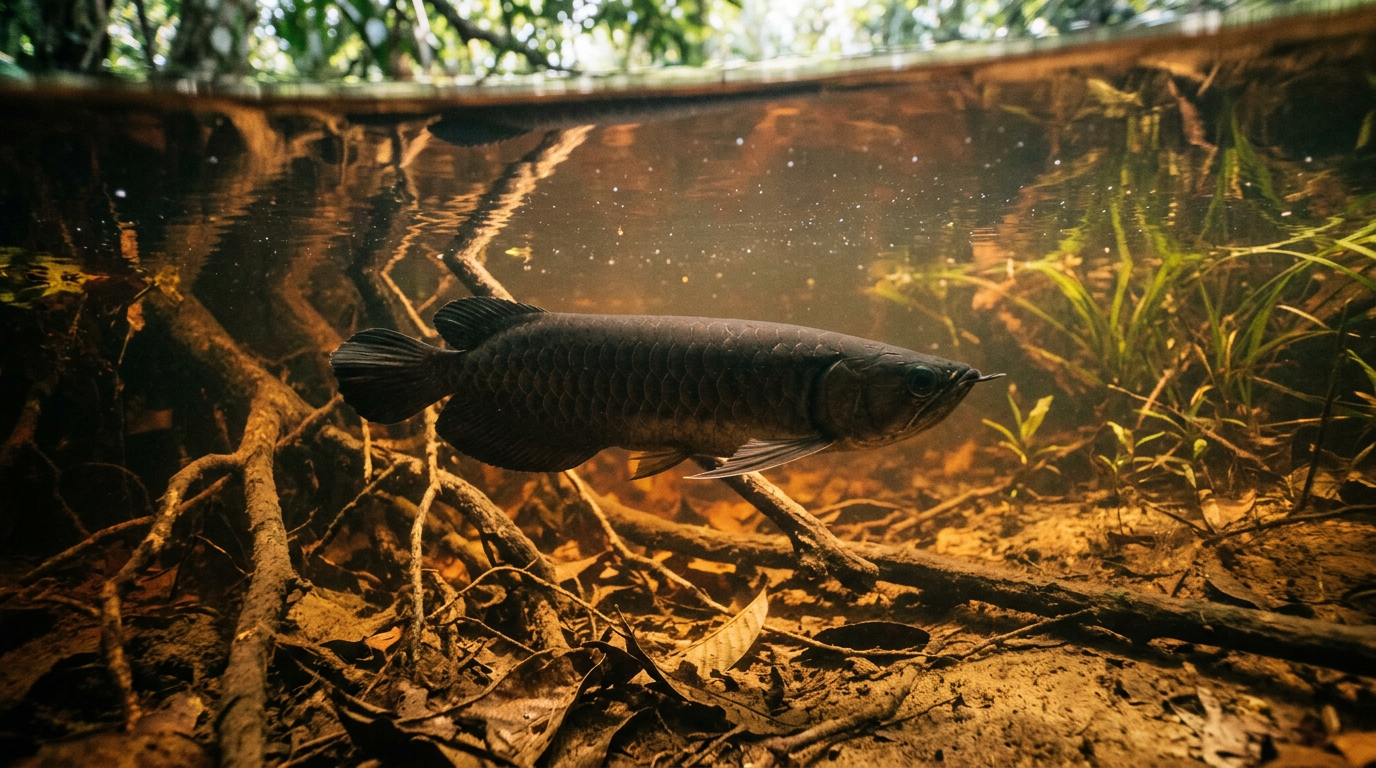
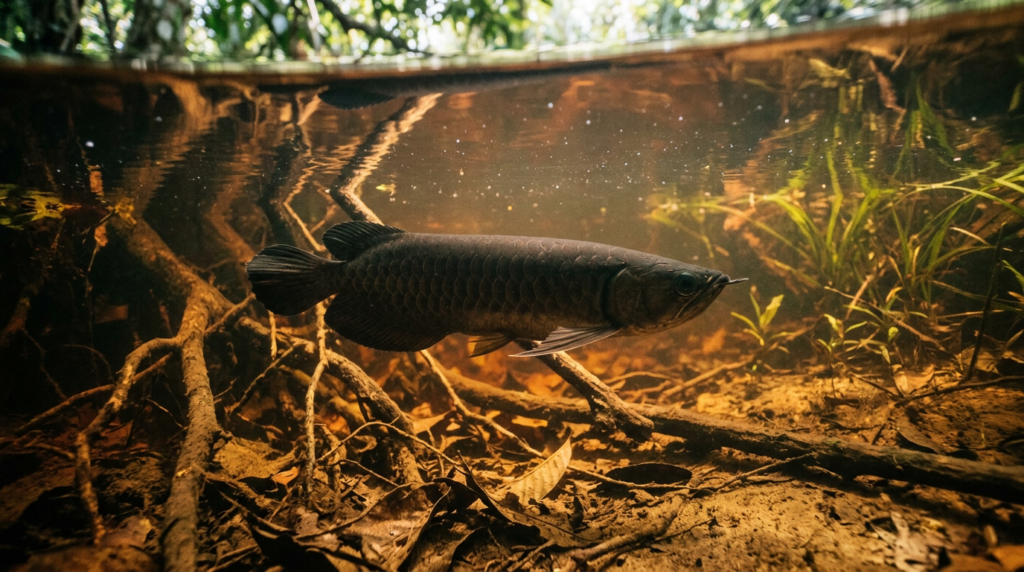
Arowana are among the most iconic fish in the aquarium hobby. Often called “dragon fish” in Asian culture, these prehistoric predators have remained virtually unchanged for over 100 million years. The Silver Arowana (Osteoglossum bicirrhosum) can reach 90 cm; the rarer Black Arowana (Osteoglossum ferreirai) is slightly smaller with a striking dark iridescent sheen. These are solitary, dominant surface predators that require expert-level care and very large tanks.
Arowana originate in the soft, acidic, warm blackwaters of the Amazon basin. Temperature: 26-30 C. pH: 5.5-7.0. Hardness: 0-10 dGH. Ammonia/Nitrite: 0 ppm. Nitrate below 20 ppm with weekly 30-40% water changes. Invest in powerful, oversized filtration — Arowana are messy eaters.
In the wild, Arowana are aerial ambush predators that leap to catch insects, frogs and small mammals. In captivity feed: crickets and locusts (dust with vitamin supplement), whole raw prawns, whitebait, mealworms (occasional treat, high fat). Training to pellets such as Hikari Arowana Gold ensures balanced nutrition and reduces waste. Feed adults 2-3 times per week — overfeeding causes fatty liver disease.
Drop eye (where one or both eyes sag downward) is caused by the fish constantly staring down at food. Prevention: always feed at the surface, use a floating feeding ring, and ensure the fish sees activity at eye level. Once established, drop eye cannot be reversed without surgery — prevention is everything.
Arowana will eat anything that fits in their mouth. Suitable tankmates for large specimens include large Pleco species, large Stingrays, and large robust catfish. Never keep two Arowana together unless the tank is very large (12 ft+).
Browse our current stock — every fish ships with our Live Arrival Guarantee.
Shop Tropical FishBook a Tranship