Giant Wolf Fish Care Guide (Hoplias aimara)
Introduction
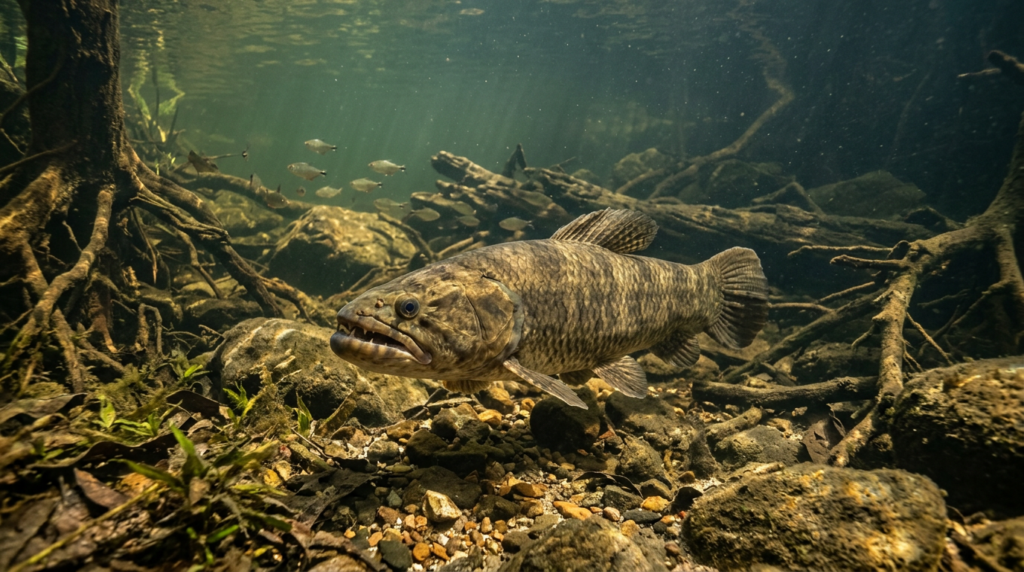
Hoplias aimara — known as the Giant Trahira, Aimara or Giant Wolf Fish — is one of the most formidable predatory fish available in the hobby. Native to South American rivers, this ambush predator can reach 80-100 cm and is equipped with large, fang-like teeth designed to grip struggling prey. It is a species for dedicated, experienced aquarists who want one of nature’s most effective predators as a specimen fish.
Despite their fearsome reputation, Hoplias aimara are surprisingly calm when given adequate space. They spend most of their time motionless, wedged under driftwood, waiting. When feeding time comes, their explosive speed and power are genuinely startling.
Tank Setup
- Size: 6 x 2.5 ft for juveniles; adults ultimately need an 8 x 3 ft tank or larger.
- Decor: Large hiding spots are essential — the fish must be able to fully conceal itself. Large bogwood, hollow logs and overhanging slate are ideal.
- Lighting: Dim. This species is crepuscular and dislikes bright light.
- Lid: Heavy and secure. Hoplias are powerful enough to dislodge an unsecured lid.
- Filtration: Powerful mechanical and biological filtration — these fish produce significant waste.
Water Parameters
Temperature: 24-28 C. pH: 5.5-7.5 (tolerant of a wide range). Hardness: 3-15 dGH. Ammonia/Nitrite: 0 ppm. Nitrate below 30 ppm. Weekly water changes of 30% are adequate in a well-filtered tank.
Feeding
In captivity feed: whole frozen fish (tilapia, mackerel portions, whitebait), frozen prawns (whole, shell-on), large carnivore pellets once trained, and earthworms for variety. Feed adults once or twice per week — these fish have slow metabolisms. Never use bare hands in the tank while feeding — use long tongs. Hoplias have attacked keepers and their bite is serious.
Handling and Safety
Take this section seriously. Hoplias aimara bite hard and the teeth are like fish hooks. If bitten, do not pull away — push toward the fish slightly to open the grip, then remove. All tank maintenance should be done with the fish visible and away from your hand. Consider using thick rubber gloves for water changes.
Tankmates
There are no truly safe tankmates for a large Hoplias aimara — the gape is enormous. This is a specimen fish, kept alone.
Ready to add one to your collection?
Browse our current stock — every fish ships with our Live Arrival Guarantee.
Shop Tropical FishBook a TranshipDiscover more from
Subscribe to get the latest posts sent to your email.