Koi Care Guide
Overview
Japanese Koi (Cyprinus rubrofuscus) are the most iconic ornamental fish in the world — selectively bred in Japan for over 200 years from wild carp, resulting in hundreds of varieties with spectacular colour patterns, metallic sheen, and body confirmation that represent the pinnacle of ornamental fish breeding. The word “Koi” simply means “carp” in Japanese, but in the ornamental world it refers specifically to the coloured varieties (Nishikigoi — “brocaded carp”).
Keeping Koi well is a serious commitment. These are large, long-lived fish that can exceed 60–90cm in optimal conditions and live for 25–35 years. A well-designed pond with excellent filtration is the foundation of successful Koi keeping; cut corners on either and you will struggle regardless of the quality of fish you purchase.
MTF Aquatics supplies a range of high-quality Koi foods from leading Japanese brands including JPD Fujiyama, Medicarp, and Yamato Nishiki, designed to enhance growth, colouration, and immune function in pond Koi.
Pond Requirements
There is no shortcut to adequate pond volume. Koi are large, active fish that produce significant waste, and under-filtering or under-sizing a pond is the single most common mistake in Koi keeping.
- Minimum volume: 5,000 litres for a small starter collection; 10,000–20,000+ litres for serious Koi keeping
- Minimum depth: 1.2m (1.5m+ is strongly preferred) — provides thermal stability and space for Koi to orientate vertically
- Bottom drain: Essential in all serious Koi ponds — waste accumulates at the bottom and must be removed efficiently
- Filtration: A purpose-built Koi filtration system combining mechanical filtration (drum filters, settlement chambers) and biological filtration (biofilter, bead filters) rated for double the pond volume
- UV Steriliser: Recommended to control free-swimming algae (green water) and reduce pathogen load
- Aeration: Essential — dissolved oxygen must be maintained above 6mg/L at all times, especially in summer when warm water holds less oxygen
- Shade: Partial shading in summer prevents overheating and excessive algae growth
Water Parameters
- Temperature: 10–28°C; Koi are cold-water fish that can tolerate near-freezing temperatures but thrive at 18–24°C
- pH: 7.0–8.5 (Koi prefer neutral to slightly alkaline water)
- KH (carbonate hardness): 100–200 ppm — KH buffers pH and must be maintained; a KH crash causes rapid, dangerous pH swings
- Ammonia/Nitrite: 0 ppm at all times
- Nitrate: Below 40 ppm; regular partial water changes (10–20% weekly in summer) maintain nitrate levels
- Dissolved Oxygen: Above 6 mg/L
Feeding Koi
Feeding quality and quantity directly impact growth rate, body condition, and colouration. Japanese Koi foods are formulated to very high nutritional standards and represent a significant advantage over generic pond pellets.
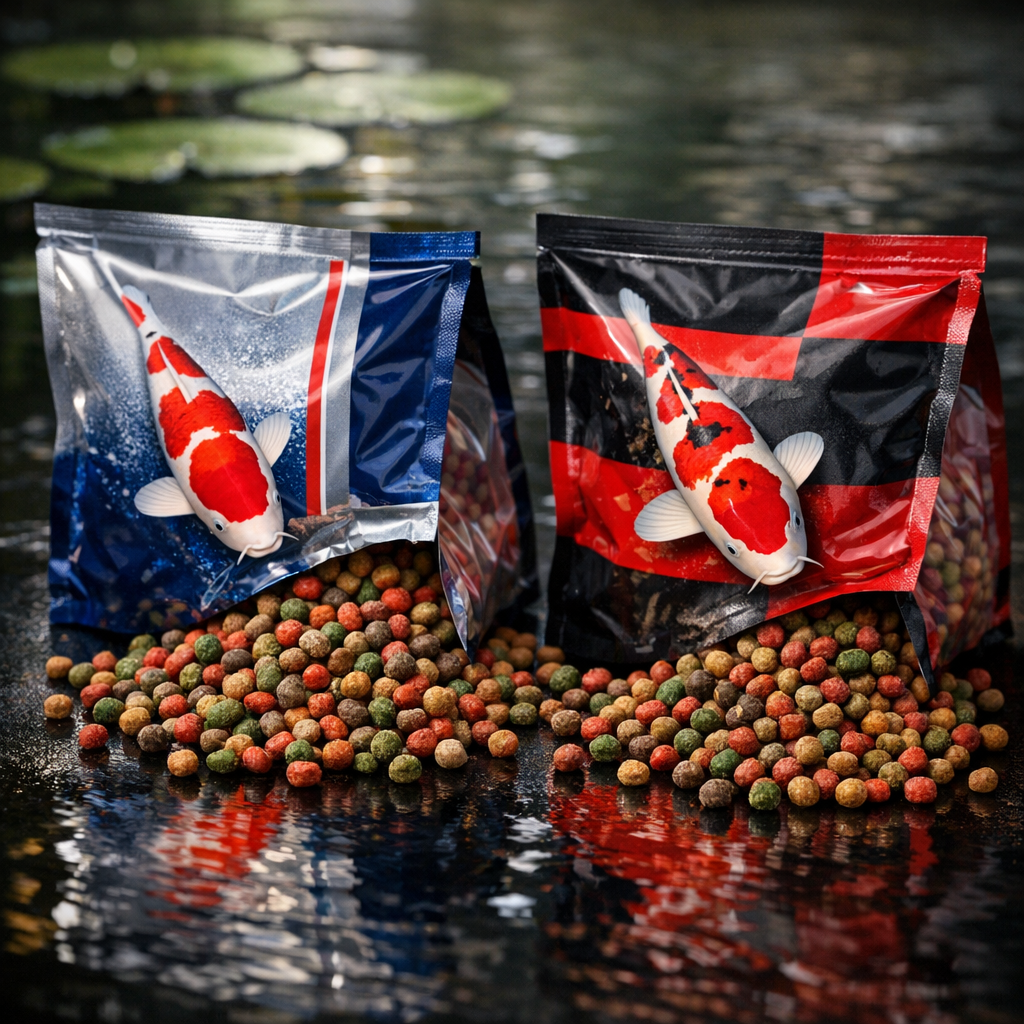
MTF Aquatics stocks the following premium JPD Koi foods:
- JPD Fujiyama: A high-protein growth food using high-quality fish meal. Ideal for spring and summer feeding when water temperatures are above 15°C.
- JPD Medicarp Colour: Enriched with spirulina and astaxanthin for dramatically enhanced red, orange, and yellow pigmentation.
- JPD Yamato Nishiki: An advanced multi-season food with added immunostimulants and vitamins for overall health and disease resistance.
- JPD Shori: A digestible, lower-protein food suitable for feeding during cooler temperatures (10–15°C) when Koi metabolism slows.
Feed 2–4 times daily in warm weather (above 15°C), reducing to once daily as temperatures fall below 15°C. Stop feeding entirely below 8°C — Koi’s digestive systems essentially cease to function in very cold water, and undigested food in the gut can cause serious health problems.
The “5-minute rule”: feed only as much as Koi will consume in 5 minutes. Remove any uneaten food immediately. Overfeeding is the primary driver of poor water quality in Koi ponds.
Seasonal Management
Spring: As water warms above 10°C, begin feeding with easily digestible foods. Perform a thorough health check on all fish — winter stresses can cause latent bacterial or parasitic issues to flare. Begin full filtration operation.
Summer: Peak feeding season. Increase feed quantity for maximum growth. Monitor dissolved oxygen closely — hot weather reduces oxygen solubility. Watch for signs of disease, which spreads quickly in warm water.
Autumn: Reduce feeding as temperatures fall. Increase pond health treatments and parasite preventatives before water temperatures drop below 12°C, when treatments become less effective.
Winter: Stop feeding below 8°C. If the pond is likely to freeze, maintain an opening in the ice using a pond heater or ball float — toxic gases must be able to escape. Do not smash ice — the shockwave stresses Koi.
Common Health Issues
- Ulcers (Aeromonas/Pseudomonas): Bacterial infection causing open sores. Caused by poor water quality, physical injury, or immune stress. Treat with antibacterial pond treatments or veterinary antibiotics for severe cases.
- Koi Herpesvirus (KHV): A serious notifiable disease in the UK. Presents as massive gill necrosis, lethargy, and rapid death at temperatures of 18–28°C. No cure; isolation and reporting to APHA is legally required.
- Parasites (fluke, Costia, Trichodina): Very common, especially in newly stocked ponds. Regular microscopy of skin and gill scrapes is recommended. Treat with appropriate licensed pond treatments.
- Fin rot: Bacterial erosion of fins, often secondary to injury or poor water quality.
Where to Buy Koi Supplies in the UK
MTF Aquatics supplies a full range of premium JPD Koi foods in both medium and large pellet sizes, pond filtration equipment including EconoBead filters, Evolution Aqua K+ filters, and UVC units. Browse our full dry goods range for everything your pond needs.
Ready to add one to your collection?
Browse our current stock — every fish ships with our Live Arrival Guarantee.
Shop Tropical FishBook a TranshipDiscover more from
Subscribe to get the latest posts sent to your email.