Bichir (Polypterus) Care Guide
Overview
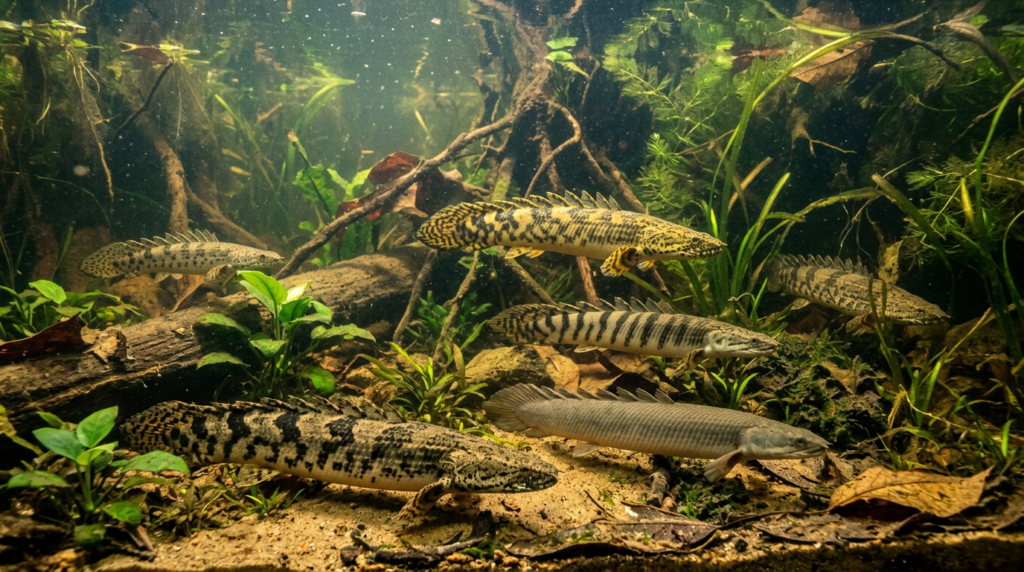
Bichirs (Polypterus spp.) are among the most ancient fish kept in the aquarium hobby, belonging to the family Polypteridae — a lineage that diverged from other ray-finned fish approximately 350 million years ago. They are characterised by their distinctive series of dorsal finlets (which inspired the genus name: poly = many, pteron = wing), their heavily armoured ganoid scales, and their ability to breathe atmospheric air using a primitive lung.
The Mokelembembe Bichir (Polypterus mokelembembe) is a medium-sized, elegant species that reaches approximately 35–45cm and is considered one of the most attractive members of the genus, with clean dark banding on a grey-green body. Bichirs in general are regarded as excellent beginner-to-intermediate fish for those interested in large, unusual species: they are robust, tolerant of a wide range of water conditions, and peaceful toward fish too large to eat.
Natural Habitat
Polypterus species are found across central and west Africa, inhabiting sluggish rivers, floodplains, swamps, and marshy areas. The Mokelembembe Bichir is named after the Congo River tributary system. Their habitat is often low in oxygen — hence the evolved ability to breathe air — warm, and densely vegetated with a muddy substrate.
Tank Requirements
- Minimum tank size: 200 litres for juveniles; 350–450 litres for adults
- Substrate: Fine sand or smooth gravel — Bichirs spend significant time moving along the substrate
- Décor: Driftwood, rocks, and dense planting or PVC caves. Bichirs are secretive and appreciate multiple hiding spots
- Cover: A secure lid is non-negotiable — Bichirs are accomplished escape artists that can squeeze through surprisingly small gaps and “walk” short distances out of water on their pectoral fins
- Air access: The water surface must be accessible — Bichirs need to surface-breathe every few minutes
- Lighting: Low to moderate; Bichirs are primarily crepuscular and nocturnal
Water Parameters
Bichirs are one of the most water-parameter-tolerant fish in the hobby. Standard UK tap water suits most species well without modification.
- Temperature: 24–30°C
- pH: 6.5–8.0 (highly tolerant)
- Hardness: 5–25 dGH (exceptionally adaptable)
- Ammonia/Nitrite: 0 ppm
- Nitrate: Below 40 ppm
Feeding
Bichirs are carnivores with poor eyesight — they hunt primarily by smell and vibration. They are slow, methodical feeders that should not be housed with fast, competitive eaters that steal food before the Bichir can locate it.
Ideal foods:
- Earthworms (the single best food for Bichirs — stimulates intense feeding activity)
- Hikari Massivore sinking pellets (train from juvenile stage)
- Raw prawns and mussels
- Bloodworm (live or frozen)
- Whole lance fish and silversides for adults
Feed in the evening after lights-out for best results. Bichirs are nocturnal and feed most confidently in darkness. Drop food directly in front of them using tongs if possible — their eyesight is limited.
Tank Mates
Bichirs are peaceful toward fish too large to eat. Their slow movement and poor vision means fast, aggressive fish will often bully them or steal their food.
Good choices:
- Large cichlids that won’t harass them (Uaru, Geophagus, large Eartheater cichlids)
- Arowana and other large surface-oriented fish
- Large, peaceful catfish
- Multiple Bichirs of similar size (they coexist well as a group)
Avoid:
- Aggressive cichlids that will nip their fins
- Small fish that will be eaten
- Fast-moving competitive feeders
Common Health Issues
- Fin rot: Usually bacterial, triggered by poor water quality or injuries from tank mates. Treat with clean water and antibiotics if severe.
- Skin infections: Reddening or ulceration of the skin. Address water quality immediately.
- Starvation in community tanks: Ensure Bichirs are actually getting food — observe feeding closely, especially if housed with fast-moving fish.
Where to Buy Bichirs in the UK
MTF Aquatics stocks a rotating selection of Polypterus species including Mokelembembe Bichir and other rare varieties through our transhipping network. Check our current listings or contact us for availability.
Ready to add one to your collection?
Browse our current stock — every fish ships with our Live Arrival Guarantee.
Shop Tropical FishBook a TranshipDiscover more from
Subscribe to get the latest posts sent to your email.