Pike Cichlid Care Guide
Introduction
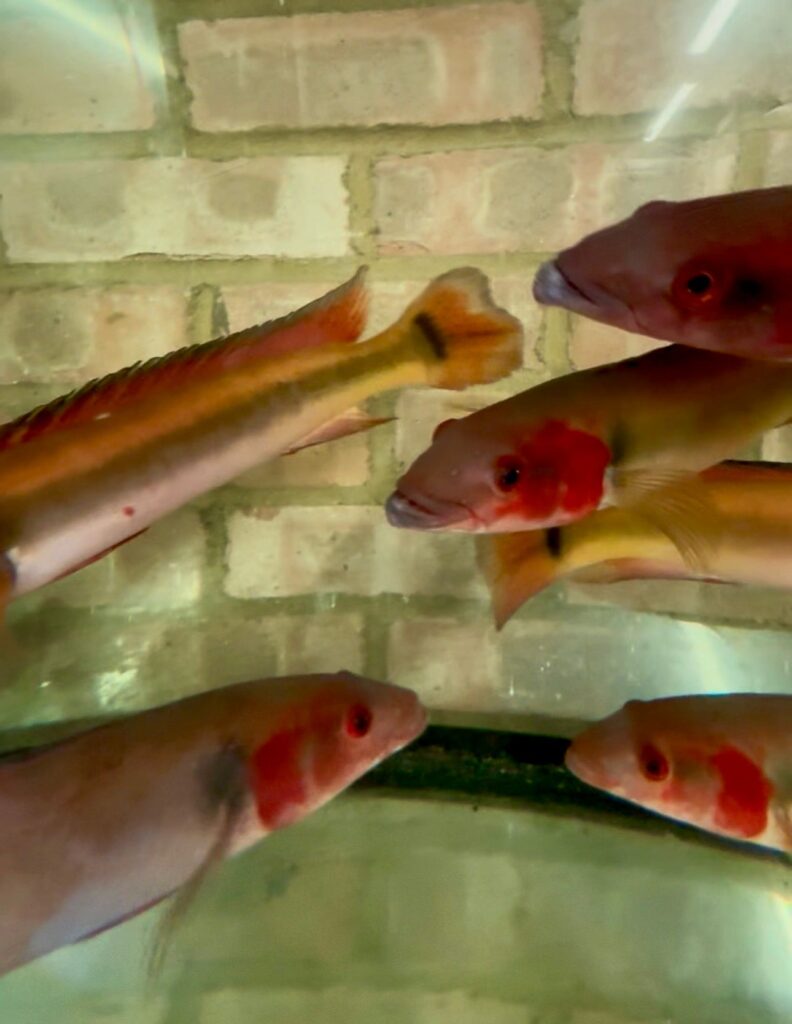
Pike Cichlids (Crenicichla sp.) are some of the most visually impressive and behaviourally complex cichlids in the hobby. With an elongated torpedo-shaped body and explosive speed, they are true ambush predators. The Red Atabapo Pike Cichlid is one of the most desirable species: large, brilliantly coloured and fierce. The genus contains over 90 species ranging from dwarf forms (15 cm) to giants exceeding 60 cm.
Tank Setup
- Size: 5 x 2 ft minimum for medium species; 6-7 ft for large species.
- Decor: Lots of visual breaks — large pieces of driftwood, rock formations and robust plants to define territories and reduce aggression.
- Substrate: Fine to medium-grain sand.
- Current: Moderate — pike cichlids originate from fast rivers.
- Lid: Strongly recommended — startled pike cichlids can jump.
Water Parameters
Temperature: 26-28 C. pH: 5.5-7.0 (soft, slightly acidic preferred). Hardness: 0-10 dGH. Ammonia/Nitrite: 0 ppm. Nitrate below 20 ppm. RO water or soft tap water is ideal — many species come from blackwater systems.
Feeding
In the wild pike cichlids are piscivores but can accept varied captive diets: frozen whole fish (lancefish, whitebait), frozen prawns, large cichlid pellets, and earthworms. Weaning off live food takes patience — withhold food for 4-5 days, then offer frozen food via tongs mimicking movement.
Aggression Management
Pike cichlids are extremely aggressive toward their own kind. For most hobbyists, a single specimen is simplest. Pairs can be kept for breeding but the male will often kill the female outside spawning condition — use a divider until the female is visibly receptive, and monitor closely for 48 hours after introduction.
Tankmates
Best kept alone or with large armoured catfish (Plecos, large Pimelodids) whose armour makes them unappealing targets. Large Silver Dollars can work as dither fish in very large setups. Never house with smaller fish or similarly sized cichlids.
Breeding
Pike cichlids are substrate spawners. They excavate a pit or use a cave, and both parents guard the eggs and fry. Condition with high-quality live/frozen food and large water changes with slightly cooler water to trigger spawning. Fry can be raised on microworms, baby brine shrimp and then chopped earthworm.
Ready to add one to your collection?
Browse our current stock — every fish ships with our Live Arrival Guarantee.
Shop Tropical FishBook a TranshipDiscover more from
Subscribe to get the latest posts sent to your email.