Most freshwater setup guides are written for beginners buying guppies from a garden centre. This one isn’t. If you’re planning a tank around a Black Arowana (Osteoglossum ferreirai), a wild-caught Corydoras CW217, a 3-Bar Datnoid (Datnioides microlepis), or an ultra-rare Suttoni Blue Eye Panaque, the rules change substantially — and getting any of the fundamentals wrong is expensive, both financially and for the animal.
This guide walks through every decision in sequence: footprint and volume, filtration sizing, substrate, hardscape, planted-tank considerations, and a stocking strategy framework. Real examples come from MTF’s current and recent livestock.
The single most common mistake experienced hobbyists make when moving into rarer species is planning for the fish they’re buying, not the fish they’ll have in three years. A 12–13 inch Black Arowana (Osteoglossum ferreirai) will reach 90–100 cm as an adult. A Suttoni Blue Eye Panaque at 10–12 inches is already mature — but a 3-Bar Datnoid bought at 4–6 inches will eventually demand a very different volume of real estate.
| Species group | Min footprint | Min volume | Notes |
|---|---|---|---|
| Arowana (adult) | 8 × 3 ft | ~670 L | Turning radius is the constraint, not litreage |
| Large predatory cichlid / Datnoid | 5 × 2 ft | ~350 L | 6 × 2 ft preferred |
| Bichir (Polypterus spp.) | 4 × 2 ft | ~220 L | Low active, but escape artists |
| L-number / Panaque pleco | 4 × 2 ft | ~220 L | Caves add usable territory |
| Wild Corydoras groups (CW-coded) | 3 × 1.5 ft | ~90 L | Footprint matters more than depth |
One practical point: for large predatory fish, footprint length is more important than depth. A 6 × 2 ft tank at 60 cm depth is superior to a 4 × 2 ft tank at 90 cm depth for a Datnoid or Arowana — these fish navigate horizontally.
Generic advice says “filter for twice your tank volume per hour.” With rare, high-value wild-caught fish, that baseline is insufficient. Wild-caught specimens arrive from pristine river systems — the Amazon tributaries, Indonesian blackwater habitats — and have zero tolerance for the ammonia spikes that a cycling canister filter can generate.
| Setup type | Target turnover | Recommended approach |
|---|---|---|
| Large predator / messy feeder | 8–10× per hour | Oversized canister + sump, or twin canisters |
| Sensitive wild-caught (Corydoras, Datnoid) | 6–8× per hour | High-quality canister + pre-filter sponge |
| Planted blackwater (low flow) | 3–5× per hour | Canister with spray bar diffusion; avoid surface agitation |
Biological media is where the money goes. A tank housing a £250–£450 specimen fish is not a setup to save money on filtration media. High-surface-area sintered glass (Seachem Matrix, Eheim Substrat Pro) gives your beneficial bacteria the colonisation space they need. Run at least two biologically mature sponge pre-filters — they also serve as backup bacterial colonies if you ever need to rehome a fish or deep-clean the main canister.
On RO water: many of the species MTF sources — wild Corydoras CW-coded fish, Datnoids, Arowana — come from soft, low-TDS environments. UK tap water routinely runs at 250–400 ppm and 10–20 dGH depending on region. If you’re in a hard-water area, an RO unit isn’t optional for these species. Target 2–5 dGH and 50–100 ppm TDS for blackwater setups; pH 5.5–6.5 with tannins.
Substrate choice affects water chemistry, fish behaviour, and plant root health simultaneously. There is no universal answer — it depends entirely on the species you’re stocking.
| Setup type | Recommended substrate | Why |
|---|---|---|
| Arowana / large predator | Fine sand or bare bottom | Easy waste removal; no substrate to trap debris |
| Wild Corydoras, CW-coded | Fine sand (0.1–0.5 mm grain) | Barbel health — coarse gravel abrades sensory barbels over time |
| L-number Pleco / Panaque | Mix of fine sand + coarse gravel areas | Feeding behaviours; biofilm growth on larger particles |
| Planted blackwater | Fine sand capped over root tabs or nutrient substrate | Soft water + tannin-stained; dark substrate reduces fish stress |
| Datnoid | Fine sand or smooth gravel | Midwater species — substrate matters less, but fine sand reduces turbidity |
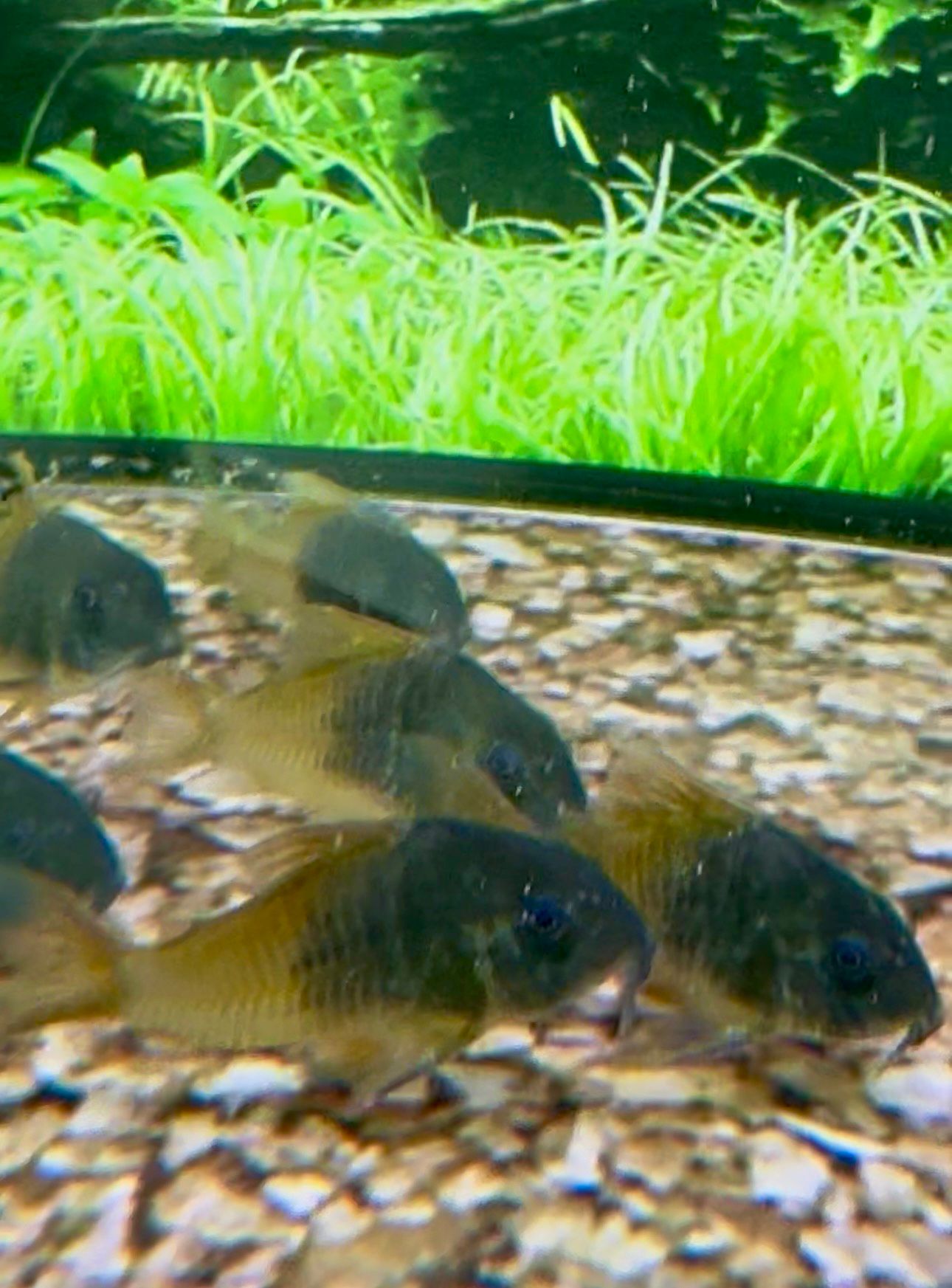
For any wild-caught Corydoras — including rare CW-coded finds like the CW217 (Corydoras Hoplisoma sp. aff. Concolor) — fine sand is non-negotiable. Their barbels are how they locate food; sand that’s too coarse will erode them within weeks.
The phrase “driftwood is not optional decor; it is a dietary requirement” applies directly to xylivorous species like Panaques and Royal Plecos (Panaque / Baryancistrus genera). These fish rasp wood to extract cellulose and gut microbiota — a tank without driftwood is a welfare issue, not an aesthetic one.
For non-wood-eating species, hardscape still matters:
Mopani driftwood releases moderate tannins and is dense enough to sink without soaking. Cholla and Malaysian driftwood release heavier tannin loads — useful if you’re actively building a blackwater setup. Bogwood (bog oak) is intermediate. All driftwood should be boiled or baked before introduction if you’re keeping high-value wild-caught stock — introducing pathogens on hardscape is an avoidable risk.
A planted tank with rare tropicals involves trade-offs that generic planted-tank guides don’t address.
High CO₂ vs. fish welfare: pressurised CO₂ systems that drive pH below 6.0 at night can cause respiratory distress in fish that haven’t evolved for extreme diel pH swings. Monitor pH across the 24-hour cycle, not just at lights-on. If you’re keeping an Arowana or Datnoid alongside plants, run CO₂ only during photoperiod, and keep the drop to no more than 0.5–0.8 pH units overnight.
Plant selection for large or predatory setups:
| Plant | Suitable for large fish? | Notes |
|---|---|---|
| Microsorum pteropus (Java Fern) | ✓ | Rhizome plant, attaches to wood; large fish don’t uproot |
| Anubias barteri | ✓ | Slow-growing, tough leaves; tie to driftwood |
| Vallisneria spp. | Partial | Easily uprooted by active large fish; better in calm setups |
| Echinodorus spp. | Partial | Excellent for Corydoras tanks; root-feeding, strong |
| Floating plants (Pistia, Salvinia) | ✓ for Arowana | Diffuses light; reduces surface reflections that stress Arowana |
Lighting intensity: blackwater setups with tannin-stained water don’t need — and actively don’t want — high PAR. Rare Corydoras from tannin-stained Amazonian habitats come from dim forest-floor environments. 20–40 PAR at substrate level is appropriate for most blackwater planted setups.
Buying rare fish without a coherent stocking plan is the most expensive mistake in the hobby. Below are three worked examples using MTF species — each with a realistic tank build and rationale.
Species: 3-Bar Datnoid (Datnioides microlepis) as sole or paired centrepiece. See our [4-Bar Datnoid care guide] for full parameters.
Tank: 6 × 2 × 2 ft (500–540 L) Water: pH 6.5–7.2, 4–8 dGH, 26–30 °C Filtration: Twin large canisters or sump; 8× turnover Substrate: Fine sand, dark-coloured Hardscape: Minimal — large driftwood pieces, open swimming lanes Tankmates (if any): Large, robust, similar-temperature fish only. Anything that fits in the Datnoid’s mouth will eventually disappear.

The 3-Bar Datnoid is one of the most visually striking fish in the hobby — gold body, bold black bar pattern. Ours are feeding on frozen shrimp, whitebait, mussels, and carnivore sticks. Transitioning away from live food before purchase is a welfare and practicality decision you’ll thank yourself for later.
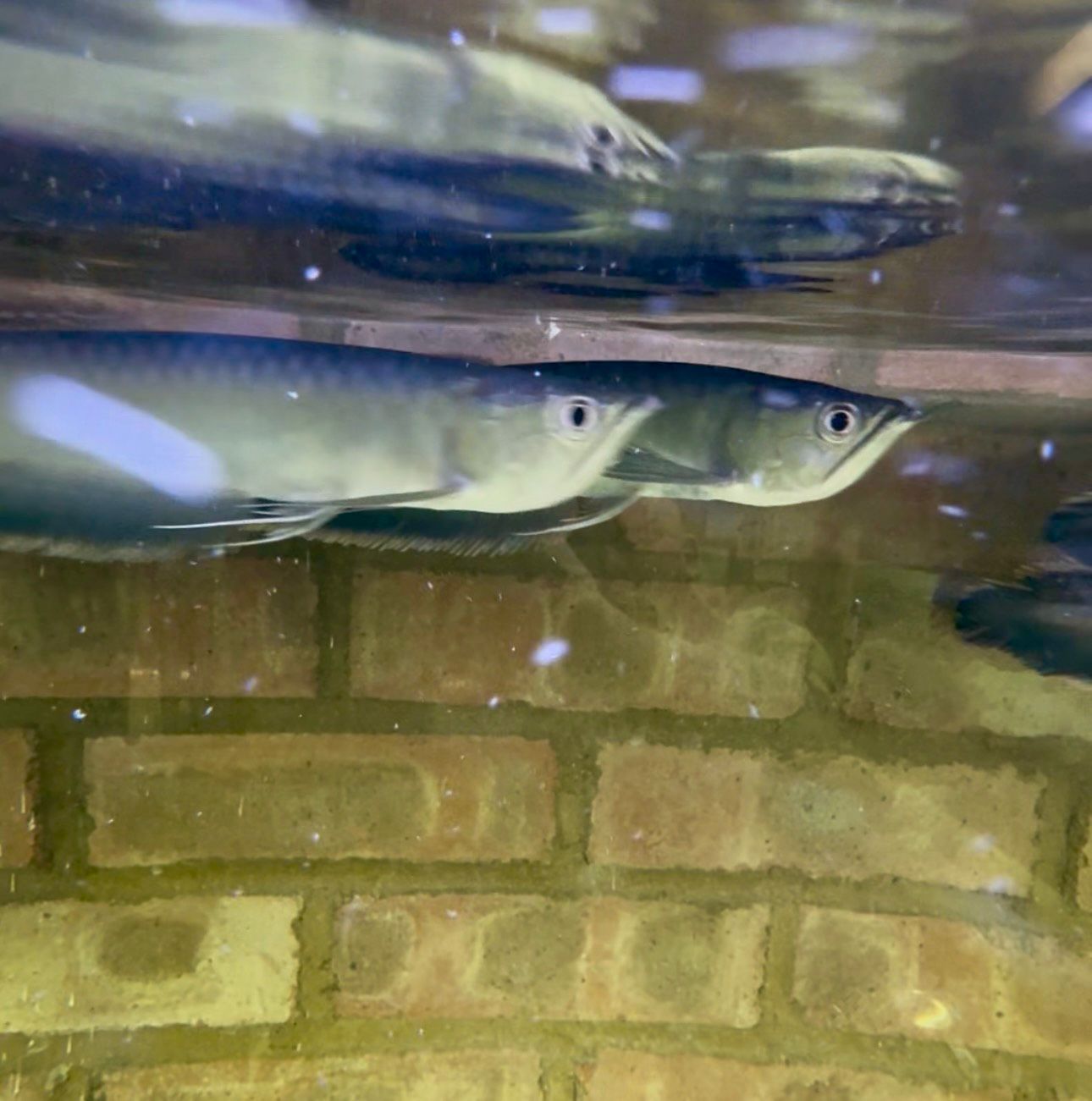
Species: Black Arowana (Osteoglossum ferreirai), currently 12–13 inches. Adult size 90–100 cm.
Tank: Absolute minimum 6 × 2 ft now; plan for 8 × 3 ft within 24 months Water: pH 5.5–6.5, 1–5 dGH, 26–30 °C — soft, acidic; RO blending required in most UK regions Filtration: Sump preferred; 8–10× turnover; external canister as backup Substrate: Bare bottom or 1 cm fine sand — waste visibility is critical at this price point Lid: Fully secured with no gaps. Surface breathers and powerful jumpers; a gap larger than 2 cm is a risk. Floating plants: Pistia stratiotes (water lettuce) or Salvinia natans to diffuse light and reduce surface reflection
The Black Arowana is a crepuscular surface predator — it hunts in low light, takes insects, small fish, and frogs in the wild. Feeding response to floating pellets (JPD Fujiyama, Hikari Massivore) alongside frozen lance fish should be established early.
Species: Corydoras Hoplisoma sp. aff. Concolor – CW217. A genuinely rare find from South American blackwater. See our [Corydoras care guide] for full parameters.
Tank: 3 × 1.5 × 1.5 ft (minimum 80 L); larger for groups of 8+ Water: pH 6.0–7.0, 2–8 dGH, 22–26 °C — softer and cooler than most tropicals Filtration: Canister with pre-filter sponge; 6× turnover minimum; avoid high flow directly over substrate Substrate: Fine sand, 3–5 cm depth — critical for barbel health Hardscape: Smooth pebbles, leaf litter (Indian almond leaves), driftwood pieces Plants: Anubias, Java Fern, Echinodorus — low-light compatible Shoal size: Minimum 6; CW217 are social and visibly stressed in small groups
The CW217 is one of those fish that makes you stop and stare. The pattern complexity is exceptional for a Corydoras, and wild-caught examples show behaviours tank-bred stock simply doesn’t replicate — active mid-day foraging, more complex shoaling dynamics, genuine territorial interactions at spawning time.
Mature biological filtration — not a ‘cycled’ filter that’s been running a week — is the baseline expectation before any rare or high-value fish enters your tank. A 6-week fishless cycle using ammonia dosing (1–2 ppm), or a 4-week cycle with a mature sponge filter seeded from an established tank, is the minimum. Test daily until you’re reading 0 ppm ammonia, 0 ppm nitrite, and a stable nitrate rise after a 2 ppm ammonia dose clears within 24 hours.
For blackwater setups, note that low pH (below 6.2) significantly slows nitrifying bacteria. Cycle at the pH you intend to keep, not at neutral.
Browse our current livestock — every fish ships with our Live Arrival Guarantee and next-day specialist live-fish courier. If a species isn’t in stock, check the MTF blog and transhipping schedule — Marc runs regular tranship orders direct from Indonesian and South East Asian exporters, bypassing the UK wholesale chain entirely.